







What Size Lithium Battery For 12V Trolling Motor
A 12V trolling motor usually needs a lithium battery between 50Ah and 125Ah, depending on motor draw, boat weight, and fishing time. For short trips on a kayak or small jon boat, a 12V 50Ah lithium battery can be enough. For most American anglers using a 30 lb to 55 lb thrust 12V trolling motor, a 12V 100Ah LiFePO4 battery is the most practical choice.
The best trolling motor battery size is the one that gives enough runtime without overloading the battery or leaving no reserve. A weekend angler fishing calm farm ponds in Missouri may need much less capacity than someone fighting wind on Lake Erie or moving through grass flats in Florida. The right choice comes from a simple runtime formula, then a safety margin for real water conditions.
👉Jump to Recommended Power Queen Lithium Battery Solutions for 12V Trolling Motor Use.
How to Calculate the Right Lithium Battery Size for a 12V Trolling Motor
The fastest way to size a 12V trolling motor lithium battery is to multiply average amp draw by desired runtime. This gives you the minimum amp-hour capacity needed before adding extra reserve. If your motor averages 30 amps and you want 3 hours of strong use, you need about 90Ah, which makes a 12V 100Ah lithium battery a practical match.
The Golden Formula for Lithium Battery Capacity
The basic formula is amp draw multiplied by hours equals required amp-hours. If your 12V trolling motor draws 25A on average and you plan to fish for 4 hours, the calculation is 25A multiplied by 4 hours, which equals 100Ah. This does not mean the motor always runs at 25A, but it gives a useful planning number.
| Average Motor Draw | Target Runtime | Estimated Capacity Needed | Recommended Battery Size |
|---|---|---|---|
| 20A | 2 hours | 40Ah | 12V 50Ah |
| 25A | 4 hours | 100Ah | 12V 100Ah |
| 30A | 3 hours | 90Ah | 12V 100Ah |
| 40A | 3 hours | 120Ah | 12V 125Ah |
| 50A | 4 hours | 200Ah | Two 12V 100Ah batteries in parallel |
The formula works best when you use average amp draw instead of only maximum amp draw. A trolling motor may reach high current at full speed, but many anglers spend much of the day on lower settings. This is why real runtime often depends more on fishing style than on the motor label alone.
Why a Safety Margin Matters
A 20 percent to 30 percent safety margin is recommended because real water conditions rarely match ideal calculations. Wind, weeds, current, extra passengers, tackle, coolers, and fish finders all increase the demand on your battery. If the formula says you need 80Ah, choosing 100Ah is usually smarter than buying a battery that barely meets the estimate.
A Lake Erie walleye angler is a good example. On a calm morning, a 12V motor may draw moderate current while slowly controlling drift. When afternoon wind builds, the same boat may need much more power to hold position, so extra battery capacity becomes a practical safety buffer.
Continuous Amp Draw vs Peak Amp Draw
Continuous amp draw tells you how much current the motor uses during normal operation, while peak amp draw shows the higher current it may need during hard starts or full-speed use. Your battery must support both the runtime requirement and the motor’s current demand. This is why BMS rating matters as much as amp-hour capacity.
A small 12V motor on a lightweight kayak may work well with a 50A BMS battery. A larger 12V trolling motor pushing a loaded jon boat is better matched with a 100A BMS battery, especially if you often use higher speed settings or fish in current.

Why a LiFePO4 Battery for 12V Trolling Motor Use Is a Smart Upgrade
A LiFePO4 battery is a strong upgrade because it is lighter, holds voltage more steadily, and delivers more usable capacity than traditional lead-acid batteries. The U.S. Department of Energy notes that lithium-ion batteries are widely used because they are energy-dense rechargeable batteries, and LiFePO4 is one of the common lithium-based chemistries used in energy storage applications.
Related Reading: What Is a LiFePO4 Battery? Everything You Need to Know.
Weight Advantage and Boat Trim
A lighter battery can improve boat handling because it reduces stern weight and makes small boats easier to balance. This matters for kayaks, inflatable boats, jon boats, and compact fishing boats where every pound affects trim. A battery that is easier to carry is also easier to remove for charging or storage.
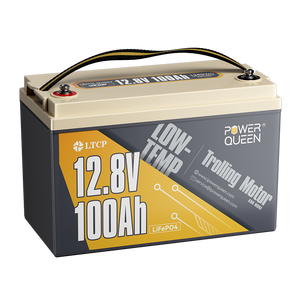
Power Queen 12V 50Ah lithium battery weighs only 11.57 lbs, which is about one-third the weight of a similar 50Ah lead-acid battery. Power Queen 12V 100Ah Low-Temp lithium battery weighs only 22 lbs, making it much easier to handle than many traditional marine lead-acid batteries.
Constant Voltage for Better Trolling Motor Performance
LiFePO4 batteries help trolling motors perform more consistently because they hold a steadier voltage through most of the discharge cycle. Lead-acid batteries usually feel weaker as voltage drops, even before the battery is fully depleted. Lithium batteries help the motor keep stronger thrust for longer.
This is especially useful when fishing Florida inshore flats, where anglers may need steady low-speed control through shallow water and vegetation. Stable voltage helps the motor respond more predictably instead of fading early in the trip.
Deep Discharge and Long-Term Value
LiFePO4 batteries provide better long-term value because they support deep cycle use and a long service life. Many lead-acid batteries lose life quickly when deeply discharged often, while LiFePO4 batteries are designed for repeated deep discharge. This makes the usable capacity more meaningful in real fishing use.
Power Queen LiFePO4 batteries offer 4000 plus cycles on many models and up to a 10-year service life. The upfront cost is higher than lead-acid, but the lower weight, deeper usable capacity, faster charging, and longer cycle life can make lithium the better long-term choice.

Matching a 12V Trolling Motor Lithium Battery to Your Boat
The right battery depends on boat size, total load, motor thrust, and available installation space. A small kayak with one angler needs a different battery than a loaded aluminum fishing boat with two people, coolers, tackle, and electronics. Matching the battery to the real setup prevents short runtime and installation problems.
Boat Size and Load Factors
Small boats usually need less capacity, while heavier boats need more reserve. A kayak, inflatable boat, or light jon boat used for short trips may pair well with a 12V 50Ah lithium battery. A 12V 100Ah battery is a better fit for longer trips, heavier loads, or 40 lb to 55 lb thrust trolling motors.
A Minnesota angler fishing cool spring mornings may also need to think about temperature protection. If the battery is stored or charged in cold weather, a low-temperature protection model or a self-heating model can be more suitable than a standard battery.
BCI Group Sizes and Physical Constraints
Battery size must match the battery box, tray, or compartment before purchase. BCI group size helps users compare physical fit, but exact length, width, height, and terminal position still need to be checked. A battery can have the right voltage and capacity but still be wrong if it does not fit the boat.
| BCI Group Size | Best Use | Main Advantage |
|---|---|---|
| Group 24 | Compact boats and limited compartments | Saves space while offering useful capacity |
| Group 27 | Mid-size boats and longer fishing days | Balances runtime and physical size |
| Group 31 | Larger marine battery boxes | Fits many heavy-duty setups |
Group size should not be treated as the only measurement. Always measure the actual battery compartment, cable clearance, hold-down strap, and lid space before choosing a battery.
Related Reading: Marine Battery Group Size Chart & Guide.
Correct Voltage Compatibility
A 12V trolling motor must use a 12V battery system. One 12V lithium battery is the simplest setup, while two or more 12V batteries in parallel can increase capacity while keeping voltage at 12V. Series connection increases voltage and should not be used for a 12V motor unless the full system is designed for a different voltage.
If you want longer runtime for a 12V trolling motor, parallel connection is usually the correct expansion method. If you are building a 24V or 36V system, confirm the motor voltage first and follow the battery connection rules from the battery manufacturer.
Read More: [Full Guide] Trolling Motor Battery System: 12V, 24V, or 36V?
Critical Technical Factors for a 12V Trolling Motor Lithium Battery
A good trolling motor battery should be judged by BMS rating, discharge capability, charging requirements, and marine safety protection. Amp-hours show capacity, but they do not show whether the battery can safely support the motor’s current demand. This is why technical details matter.
The Importance of the Battery Management System
The BMS is essential because it protects the battery from overcharge, over-discharge, over-current, short circuit, and temperature issues. A trolling motor can create sudden current demand, especially at startup or when pushing through wind and current. A weak BMS may shut down or limit performance.
Power Queen 12V 50Ah battery includes a 50A BMS, which suits lighter applications. Power Queen 12V 100Ah Low-Temp and Group 31 models include a 100A BMS, making them better suited for larger motors and heavier use.
Understanding Discharge Rating
Discharge rating matters because the battery must safely deliver the current your motor asks for. A 100Ah battery with a 100A BMS is generally more suitable for stronger trolling motor loads than a battery with a lower current limit. Peak discharge support is also useful for short surges.
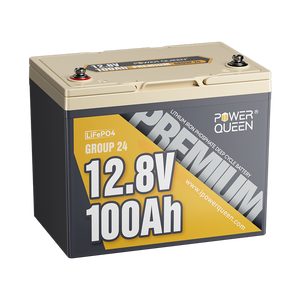
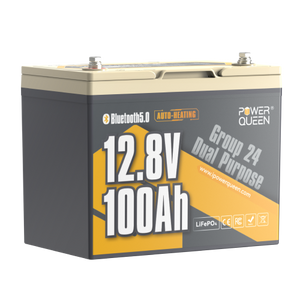
Power Queen 12V 100Ah Group 24 Smart battery offers a 500A peak discharge for 1 second, which helps handle sudden surge demand. Power Queen 12V 100Ah Low-Temp battery can withstand 300A for 5 seconds, making it a strong option for trolling motor setups when used within the proper system configuration.
Choosing the Right Charger
A 12V LiFePO4 battery should be charged with a compatible lithium charger. Many 12V LiFePO4 batteries use a 14.6V charging voltage, and using the wrong charger may result in incomplete charging or poor long-term performance. The charger current also affects charging speed.
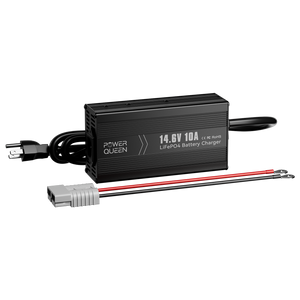
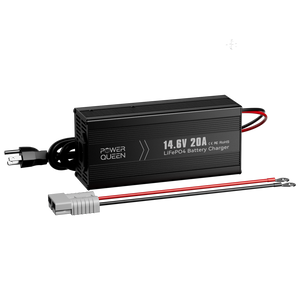
Power Queen 12V 50Ah battery can be fully charged in about 2 hours with a 25A charger. Power Queen 12V 100Ah models can often be charged in about 5 hours with a 14.6V 20A LiFePO4 charger, depending on battery condition and charger output.

Fuses and Circuit Breakers for Safer Marine Wiring
A trolling motor setup should include proper circuit protection because marine electrical systems need protection from overload and short circuit risks. The U.S. Coast Guard Boatbuilder’s Handbook provides federal compliance guidance for boat electrical systems, including electrical protection considerations for recreational boats.
The right fuse or circuit breaker size should follow the trolling motor manufacturer’s recommendation. It should also match wire gauge, connector rating, and maximum current draw. Skipping circuit protection can put the motor, wiring, and battery system at unnecessary risk.
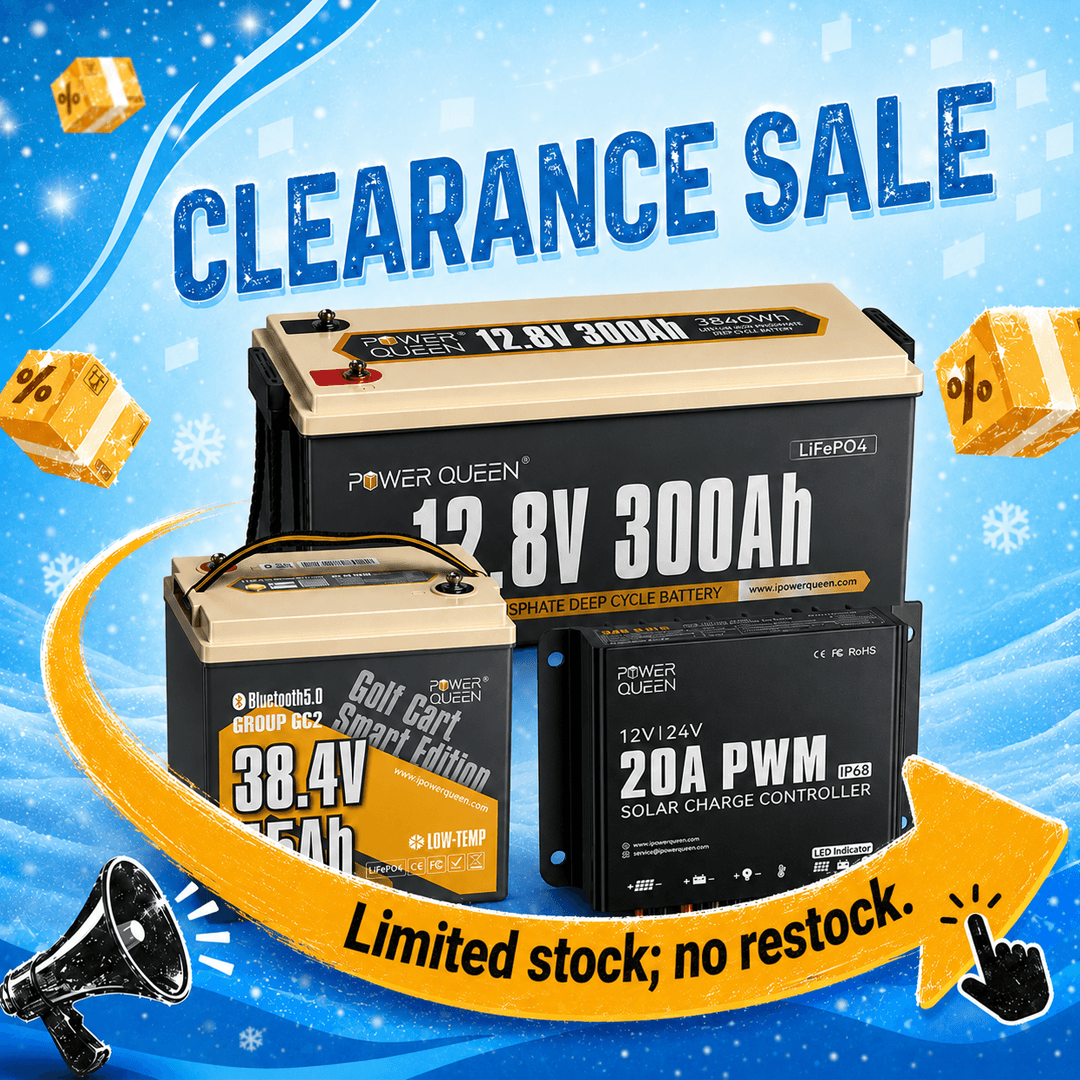
Recommended Power Queen Lithium Battery Solutions for 12V Trolling Motor Use
The best Power Queen battery depends on fishing time, boat weight, cold-weather needs, and whether the user wants smart monitoring. A 50Ah model is best for compact setups, a 100Ah model is the most balanced choice, and a 125Ah model is better for longer days. Smart models are useful when users want real-time battery data.
12V 50Ah Lithium Battery for Lightweight Boats
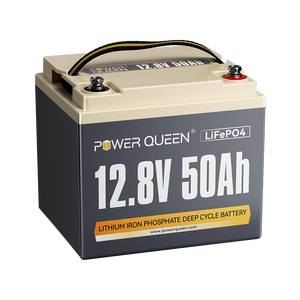
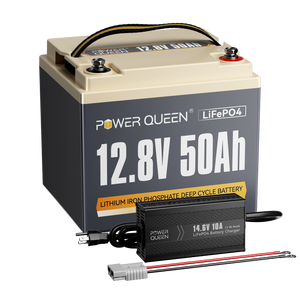
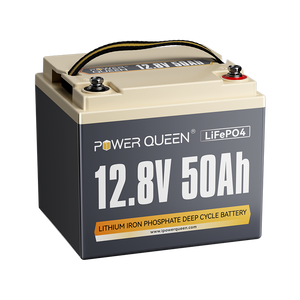
Power Queen 12V 50Ah lithium battery is best for small boats, kayaks, inflatable boats, and short fishing trips. It weighs only 11.57 lbs and provides full usable capacity, making it much easier to carry than a similar lead-acid battery. It is a good choice when compact size and low weight matter most.
This model includes a 50A BMS for protection against overcharge, over-discharge, over-current, short circuit, and over-temperature. It supports fast charging and can be fully charged in about 2 hours with a 25A charger. It is not the best fit for all-day heavy trolling, but it is practical for lighter 12V trolling motor use.

12V 100Ah Low-Temp Lithium Battery for Cool-Weather Fishing
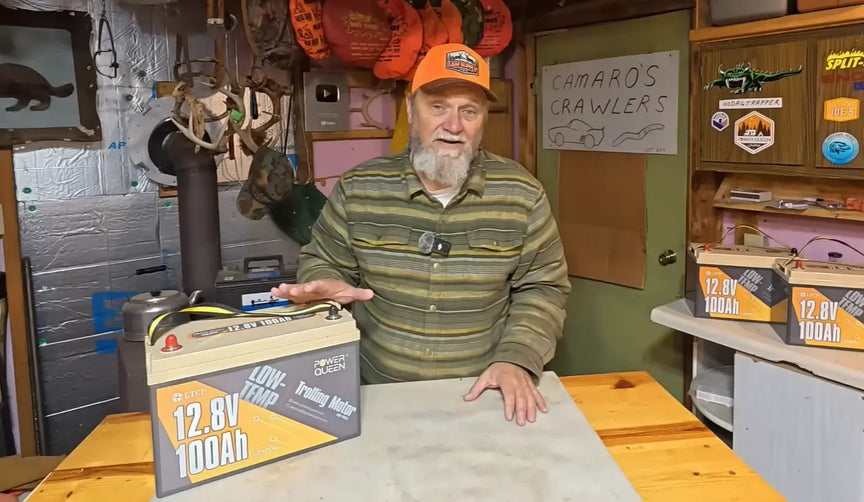
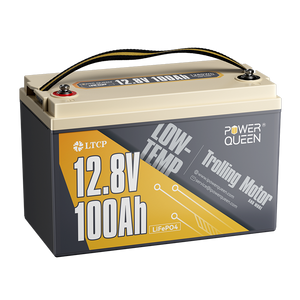
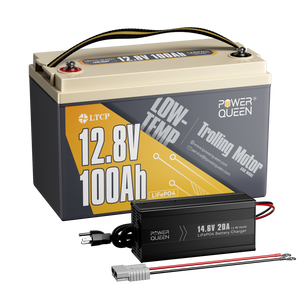
Power Queen 12V 100Ah Low-Temp lithium battery is best for anglers who fish in colder weather or need stronger protection. Its upgraded 100A BMS supports heavier load current and can withstand 300A current for 5 seconds. It can be used for 12V to 36V trolling motor systems when configured correctly.
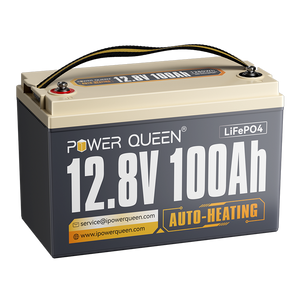
The low-temperature sensor cuts off charging below 32°F and resumes charging above 41°F. Discharging cuts off at minus 4°F. If this low-temperature protection still does not meet the user’s needs, especially for charging in freezing conditions, the Power Queen 12V 100Ah self-heating battery is a better option to consider.


Power Queen Group Size Lithium Battery Comparison
Power Queen Group 24 Smart, Group 27 Smart, and Group 31 batteries are best for users who care about fit, runtime, and monitoring. These models help users match common marine battery spaces while gaining lithium performance. The table below gives a simple comparison for faster selection.
| Model | Best For | Main Benefit | Key Specs |
|---|---|---|---|
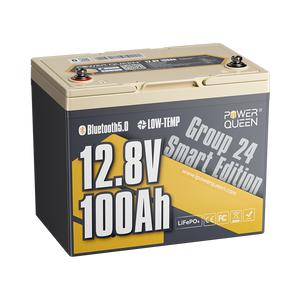
| 12V 100Ah Group 24 Smart | Compact spaces and real-time monitoring | Bluetooth 5.0 monitoring through the Power Queen App | Group 24 design, low-temperature protection, 500A 1 second peak discharge, about 5 hours charging with 14.6V 20A charger |
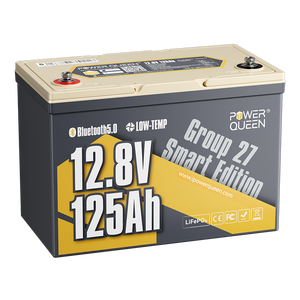
| 12V 125Ah Group 27 Smart | Long fishing days and extra reserve | More capacity in a Group 27 footprint | 12.13 × 6.69 × 8.31 inches, Bluetooth 5.0, smart BMS, low-temperature protection |
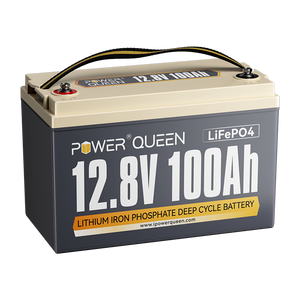
| 12V 100Ah Group 31 | Heavy-duty use and standard battery boxes | Standard Group 31 footprint with 100A BMS | 13 × 6.77 × 8.43 inches, 24.25 lbs, supports 4S, 4P, and 4P4S systems |
This comparison is most useful after users measure their battery space. Capacity matters, but fit and cable clearance are just as important for a clean marine installation.
12V 100Ah Group 24 Smart for Real-Time Monitoring
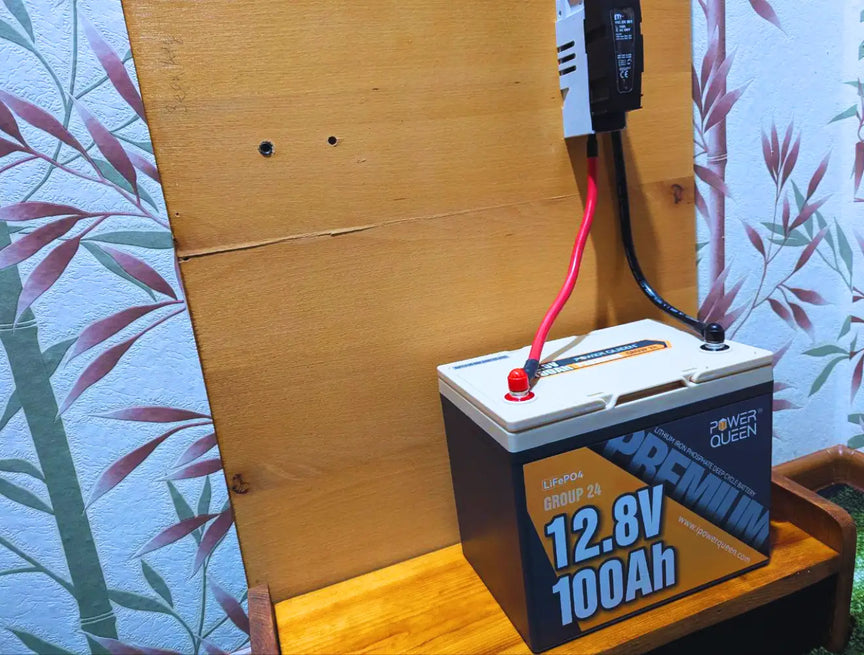
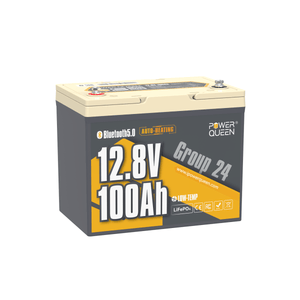
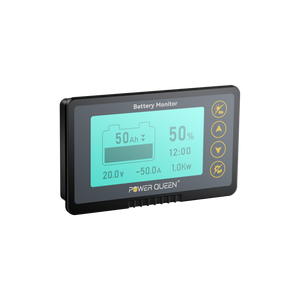
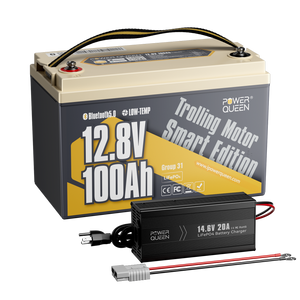
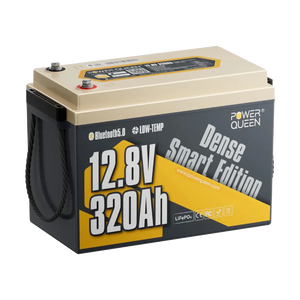
Power Queen 12V 100Ah Group 24 Smart battery is best for users who want to see battery status instead of guessing. Bluetooth 5.0 allows users to check SOC, voltage, current, power, and battery condition through the Power Queen App. This helps reduce power anxiety during long fishing trips.
This model also includes low-temperature protection, moisture and salt spray resistance, and strong surge support. It is a practical choice for anglers who want a compact battery with smart features for trolling motors, RVs, camping, and off-grid use.
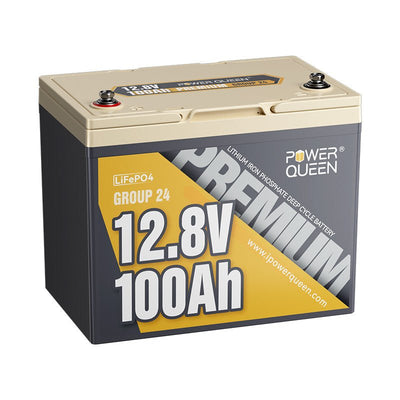
12V 125Ah Group 27 Smart for Extended Range
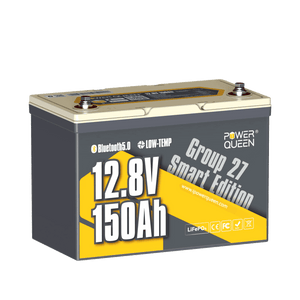
Power Queen 12V 125Ah Group 27 Smart battery is best for longer fishing days. It provides 125Ah capacity in a BCI Group 27 size, giving more runtime than a standard 100Ah battery in many similar-space applications. This makes it useful for anglers who run a trolling motor and electronics for several hours.
Bluetooth 5.0 monitoring allows users to view SOC, voltage, current, power, temperature, charge status, discharge status, and protection status. The smart BMS includes low-temperature charge and discharge protection, making this model suitable for serious fishing trips where extra reserve matters.
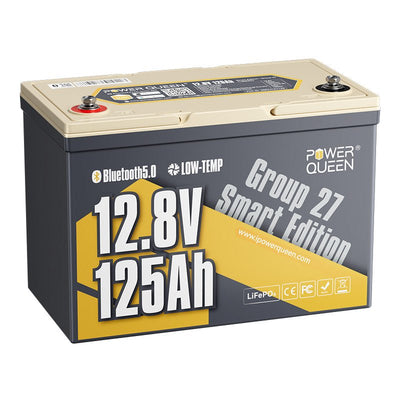
12V 100Ah Group 31 for Heavy-Duty Use
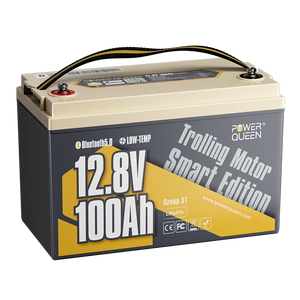
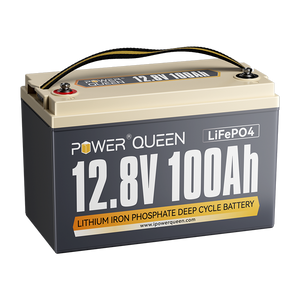
Power Queen 12V 100Ah Group 31 battery is best for boaters who already use a Group 31 battery box or tray. It measures 13 × 6.77 × 8.43 inches and weighs only 24.25 lbs. This gives users a familiar marine footprint with much lower weight than many lead-acid options.
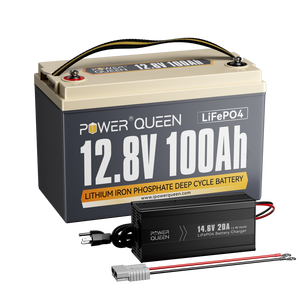
The built-in 100A BMS protects against overcharge, over-discharge, over-temperature, over-current, and short circuit. It supports flexible expansion and can be charged in about 5 hours with a 14.6V 20A LiFePO4 charger. It is a strong choice for heavier trolling motor use and standard marine installations.


Common Pitfalls When Choosing a Lithium Battery for 12V Trolling Motor Use
Most battery problems come from choosing too little capacity, ignoring physical dimensions, or skipping electrical protection. Avoiding these mistakes can improve runtime, safety, and overall user experience. A good battery should match both the motor and the boat.
Miscalculating Capacity in Real Conditions
The most common mistake is sizing the battery for calm water only. Real fishing often includes wind, current, weeds, waves, and extra load. These conditions increase current draw and reduce runtime.
The better method is to calculate expected capacity, then add a 20 percent to 30 percent reserve. If a user is deciding between 80Ah and 100Ah, the 100Ah battery is usually the safer choice for trolling motor use.
Ignoring Battery Box Dimensions
Another common mistake is assuming all 100Ah batteries have the same size. They do not. The user should measure the battery compartment, tray, hold-down strap, lid height, terminal location, and cable bend space before buying.
This matters most when replacing a lead-acid battery with lithium. A lithium battery may be lighter and more powerful, but it still needs to fit securely in the boat.
Forgetting Fuses and Circuit Breakers
A safe trolling motor setup should include proper over-current protection. Fuses and circuit breakers help protect wiring, connectors, the motor, and the battery from fault conditions. The protection device should match the trolling motor maker’s recommendation.
A clean installation is part of battery performance. Good wiring, correct breaker size, secure terminals, and proper charger selection help the battery work safely and reliably.
Frequently Asked Questions
Is a 50Ah lithium battery enough for a 12V trolling motor?
A 50Ah lithium battery is enough for small boats, kayaks, and short trips when the trolling motor is used at moderate speed. It is not the best choice for heavy boats, long days, or frequent full-speed use. For most all-around fishing, 100Ah is safer.
How long will a 100Ah lithium battery run a 12V trolling motor?
A 100Ah lithium battery can run a 12V trolling motor for about 2 to 5 hours depending on average amp draw. If the motor averages 25A, runtime is about 4 hours. If it averages 50A, runtime is about 2 hours.
Can I use a LiFePO4 battery with any 12V trolling motor?
Most 12V trolling motors can use a 12V LiFePO4 battery if the battery BMS supports the motor’s current draw. Users should confirm motor voltage, maximum amp draw, wiring requirements, and manufacturer guidance before installation.
Do I need a special charger for a 12V LiFePO4 trolling motor battery?
A LiFePO4-compatible charger is recommended for proper charging. Many 12V LiFePO4 batteries use a 14.6V charging voltage. A charger designed only for lead-acid batteries may not fully charge the battery or may reduce long-term performance.
Should I choose Group 24, Group 27, or Group 31?
The best group size depends on available space and desired runtime. Group 24 is compact, Group 27 offers more room for extra capacity, and Group 31 fits many heavy-duty marine battery boxes. The final choice should be based on actual dimensions, not only group name.
In Conclusion
A 12V trolling motor usually works best with a 50Ah to 125Ah lithium battery. A 12V 50Ah battery fits lightweight boats and short trips. A 12V 100Ah battery is the most balanced choice for many anglers. A 12V 125Ah battery is better for longer days, heavier boats, and users who want more reserve power.
The best way to choose is to calculate amp draw multiplied by runtime, then add a safety margin. After that, check BMS rating, discharge capability, charger compatibility, group size, physical dimensions, and low-temperature protection. With the right Power Queen trolling motor LiFePO4 battery, a 12V trolling motor can run lighter, longer, and more consistently on the water.