










How to Calculate Amps from Volts and Watts
To calculate amps from volts and watts, you simply divide the total wattage by the nominal voltage of your battery or power system. This fundamental calculation is the cornerstone of electrical safety, allowing RV enthusiasts, marine users, and off-grid homeowners to ensure their LiFePO4 battery banks and wiring are perfectly matched to their energy needs.
Whether you are sizing a solar array or choosing the right gauge wire for a 2000W inverter, mastering this formula is essential for protecting your equipment and maximizing battery lifespan.
The Essential Formula for Determining Amperage
You can find the current in any electrical circuit by applying the standard formula: Amperes = Watts / Volts.
This equation, derived from Watt’s Law, provides a direct way to see how much "flow" (amperage) is required to deliver a specific amount of "power" (wattage) at a given "pressure" (voltage). According to the U.S. Department of Energy, understanding these units helps consumers better manage energy consumption and safety at home or on the road.
How to Calculate Amps from Volts and Watts
Extended Learning: If you're still getting comfortable with these terms, check out our Battery Basics Explained: Volts, Amps, Watts, Ah, mAh & Wh (2026 Complete Guide) for a deep dive into how these units work together.
Real World Examples in American Off-Grid Life
Calculating the amperage of common appliances prevents your battery's BMS (Battery Management System) from tripping during peak usage. For instance, if you run a standard 1500W space heater in your RV through a 12.8V LiFePO4 battery, the device will draw approximately 117 Amps. Since most high-quality 100Ah lithium batteries have a 100A continuous discharge limit, this calculation immediately tells you that you need to parallel two batteries or upgrade to a 200A BMS model to handle the load safely.
Another common scenario involves modern kitchen appliances like a 1200W microwave used in a van build. When connected to a 120V AC circuit through an inverter, it pulls 10 Amps from the AC side, but on the 12V DC battery side, the draw is closer to 100 Amps. To fully grasp why these numbers shift so drastically, it is helpful to understand the Volts vs Amps: The Real Difference Between Voltage and Current.
Why Voltage Choice Matters for Battery Efficiency
Higher system voltage significantly reduces the resulting amperage even when the wattage requirement remains exactly the same. In the United States, while many entry-level RV setups run on 12V, heavy-duty off-grid systems for cabins or large motorhomes often utilize 24V or 48V LiFePO4 configurations. For a 3000W load, a 12V system pulls a massive 234 Amps, whereas a 48V system only requires 58 Amps, allowing for much thinner, lighter, and more affordable wiring.
If you are starting your calculation from the other direction and need to find the power output, refer to our guide on Volts to Watts Conversion: Formula, Examples, and Common Mistakes.
Selecting the Right Hardware for Your Current Load
Your calculated amperage determines the specific wire gauge and fuse size necessary to prevent electrical fires and excessive voltage drop. The Occupational Safety and Health Administration (OSHA) emphasizes that mismatched components are a leading cause of electrical hazards in power systems. For example, if your math shows a 100-Amp draw from your battery to your inverter, you must use at least 2-gauge copper wire; using a thinner wire would lead to heat buildup and energy loss, reducing the overall efficiency of your solar setup.
Voltage Sag and Lithium Performance
Lithium Iron Phosphate (LiFePO4) batteries maintain a stable amperage draw throughout their discharge cycle compared to traditional lead-acid batteries. When a high-wattage load is applied to lead-acid, the voltage "sags" significantly, which forces the amperage to increase to maintain the same power output, often leading to premature battery failure. LiFePO4 batteries maintain a flat voltage curve (around 12.8V-13.2V), ensuring your calculated amps stay consistent and your sensitive electronics run cooler and longer.
Knowing your amperage draw is also the first step in calculating runtime. Once you know the amps, you can easily determine how long your battery will last by reading our [Full Guide] What Is An Amp Hour (Ah).
Quick Reference Amperage Chart for LiFePO4 Systems
| Appliance Type | Watts | System Voltage | Resulting Amps | Recommended Battery |
|---|---|---|---|---|
| LED Lighting | 50W | 12.8V | 3.9A | 12V 50Ah |
| Coffee Maker | 1000W | 12.8V | 78.1A | 12V 100Ah (100A BMS) |
| Induction Cooktop | 1800W | 12.8V | 140.6A | 12V 200Ah (200A BMS) |
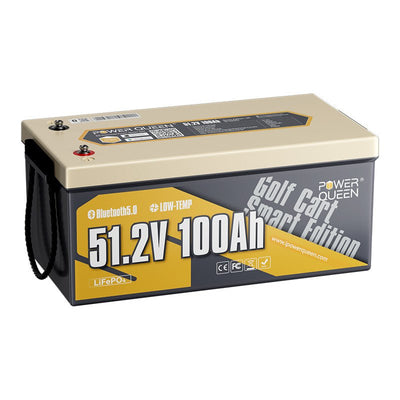
| Home Backup Unit | 5000W | 51.2V | 97.6A | 48V 100Ah |
Frequently Asked Questions
Can my battery handle a 2000W inverter?
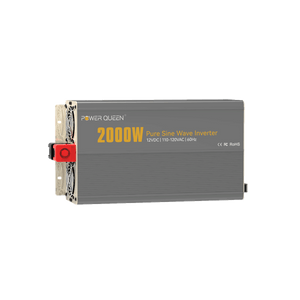
To determine compatibility, divide the inverter's maximum wattage by your battery voltage (e.g., 2000W / 12.8V = 156A). You must ensure your battery's BMS is rated for at least 150A to 200A of continuous discharge current to avoid triggering the internal safety shut-off.
Why does my fuse blow even if my calculation seems correct?
Fuses often blow due to "inrush current," which is a brief but massive spike in amperage that occurs when devices with compressors (like fridges or A/C units) first kick on. It is a best practice to size your fuses and wires based on 1.25 times your calculated continuous amperage to account for these surges, as recommended by the National Electrical Code (NEC).
Is it better to use 12V or 24V for high-power appliances?
For any sustained load over 1500W, a 24V or 48V system is superior because it halves the amperage. Lower amperage reduces "I²R" losses (heat energy lost in the wires), meaning more of your stored battery power actually reaches your appliances instead of being wasted as heat.