
















Volts to Watts Conversion: Formula, Examples, and Common Mistakes
Volts to watts conversion tells you how much electrical power a device can use or a source can deliver. This is the fastest way to estimate whether a charger, battery, outlet, or inverter can handle a load safely. You cannot complete a volts to watts conversion with voltage alone because power depends on current or resistance.
In practical terms, volts describe electrical potential, amps describe current flow, and watts describe real power. If you have ever seen a device label listing both volts and amps, the wattage is simply the result of combining those values with the correct formula.
Volts to Watts Conversion Basics: Volts and Watts
What a Volt Means
A volt measures electrical potential that pushes current through a circuit. In the United States, most standard household receptacles supply about 120 V AC, while many batteries and electronics operate at 5 V, 12 V, or 24 V DC.
What a Watt Means
A watt measures how fast electrical energy is used or delivered. If a device is rated for 100 W, it uses 100 joules per second while operating at its rated conditions.
Volts to Watts Conversion Formula Explained
The correct volts to watts conversion formula depends on whether the power is DC or AC. The simplest case is DC, where voltage and current are steady and power factor is not used. AC is more realistic for household power, where power factor can matter for motors and compressors.
Volts to Watts Conversion for DC
In DC systems, watts equal volts multiplied by amps. Use this formula for batteries, solar charge controllers, DC appliances, and most electronics.
Power (W) = Voltage (V) × Current (A)
Volts to Watts Conversion for AC
In AC systems, real watts often require a power factor adjustment. This is the practical difference between what a device draws electrically and what it turns into useful work.
Power (W) = Voltage (V) × Current (A) × Power Factor (PF)
Volts to Watts Conversion Using Resistance
If current is unknown but resistance is known, watts can be computed from volts and ohms. This is common in circuit analysis and component testing.
Power (W) = Voltage² ÷ Resistance (Ω)
Once you know which formula applies, the next step is calculating quickly and consistently. The calculator below lets you convert volts to watts and also calculate watts to volts without redoing the math each time.
Volts to Watts Conversion Calculator
Answer first: Enter volts and amps to get watts, or enter watts and amps to calculate volts. For AC loads, you can optionally include power factor to estimate real power.
Calculate Volts to Watts
Formula: W = V × A (DC) or W = V × A × PF (AC).
Watts tell you how much power is being used, but they do not show how long that power can be sustained. If you are working with batteries or portable power systems, understanding amp hours is the next step. [Full Guide] What Is An Amp Hour (Ah) explains how battery capacity relates to current draw and runtime.
Real-world examples make the formulas easier to trust. The next section shows how volts to watts conversion works in common American household and outdoor power situations.
Practical Examples of Volts to Watts Conversion
Phone Charger Example
A typical phone charger delivers around 10 to 20 watts depending on its current output. If a charger provides 5 V and 2.4 A, the power is 5 × 2.4 = 12 W.
This is why higher-current USB chargers can charge faster even though the voltage stays the same.
Household Space Heater Example
A space heater’s wattage is usually close to 1,500 W on a standard 120 V outlet. If a heater draws about 12.5 A at 120 V, the power is 120 × 12.5 = 1,500 W.
This example also explains why multiple high-watt devices on one circuit can trip a breaker.
Solar Panel Example
Solar panel output in watts is the cleanest way to compare real usable power. If a panel produces 24 V at 6 A under strong sun, the output is 24 × 6 = 144 W.
For sizing systems, wattage helps you estimate how much energy you can collect and store over time.
Common Device Power Examples (Voltage and Wattage)
Common household and outdoor devices operate at predictable voltage and wattage ranges. These examples help translate volts to watts conversion into practical expectations for everyday American use.
| Device | Typical Voltage | Typical Current | Typical Power (W) |
|---|---|---|---|
| Smartphone charger | 5 V | 2–3 A | 10–15 W |
| Laptop charger | 19–20 V | 3–5 A | 60–100 W |
| LED TV | 120 V | 0.5–1.5 A | 60–180 W |
| Microwave oven | 120 V | 8–12 A | 1,000–1,500 W |
| Portable space heater | 120 V | 10–12.5 A | 1,200–1,500 W |
This table provides realistic expectations rather than exact ratings. Always check device labels before final power planning.
Volts to Watts Conversion Reference Table
This volts to watts conversion table gives fast reference points for common scenarios. These examples reflect typical values for USB devices, batteries, solar setups, and household loads.
| Voltage (V) | Current (A) | Power (W) | Typical Use Case |
|---|---|---|---|
| 5 | 2 | 10 | USB charging devices |
| 12 | 5 | 60 | Battery and automotive systems |
| 24 | 4 | 96 | Solar panels and DC equipment |
| 120 | 10 | 1,200 | Household appliances |
| 240 | 15 | 3,600 | Large electric appliances |
Volts to Watts Conversion Common Mistakes
Ignoring Power Factor in AC Systems
Ignoring power factor can overstate real watts in AC calculations. If you use only V × A for a motor-driven appliance, you may calculate a number that looks right but does not reflect real usable power.
Confusing Voltage With Power
Voltage is not the same as wattage. Two devices can both run at 120 V while using very different watts because their current draw is different.
Trying to Convert Without Enough Data
You cannot convert volts to watts with voltage alone. You must know amps or resistance to compute power correctly.
Electrical Safety Considerations After Conversion
Volts to watts conversion is most useful when it helps you stay within safe electrical limits. In the U.S., many homes use 15 A or 20 A branch circuits at 120 V, which sets a practical ceiling on how many watts you can run before a breaker trips or wiring overheats.
Continuous loads should generally stay below about 80 percent of a circuit’s rating. This is a common guideline used for planning sustained loads like space heaters, cooking devices, or continuous charging.
Startup or surge wattage can be much higher than running wattage. Refrigerators, air conditioners, and power tools often draw extra current at startup, so sizing an inverter or portable power station based only on running watts can cause shutdowns.
Safety is ultimately about current and heat. Even when the watt number looks acceptable, a low power factor or heavy startup draw can raise current and stress cords, plugs, and breakers.
Why Devices Fail Even When the Calculation Looks Correct
A correct volts to watts calculation does not guarantee a device will operate properly. Many power issues occur because electrical limits beyond wattage are overlooked.
One common reason is insufficient surge capacity. Devices with motors or compressors often require significantly more power at startup than during normal operation.
Another issue is current limitation. Even if wattage appears acceptable, a power source may not be able to supply the required current without overheating or shutting down.
Inverter efficiency and waveform quality can also affect performance. Some electronics require stable sine wave output and may not function reliably on modified wave inverters.
When troubleshooting power issues, always verify surge ratings, current limits, and inverter specifications in addition to watts.
If you want a plain-language safety reference for electrical hazards and safe work practices, OSHA provides guidance that is widely cited in the U.S. OSHA Electrical Safety
How to Estimate Runtime Using Volts to Watts Conversion
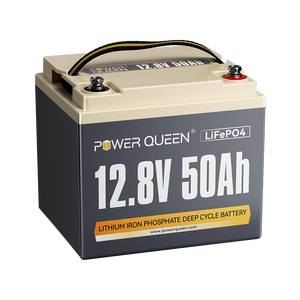
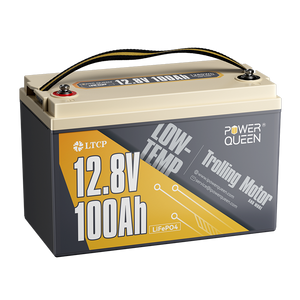
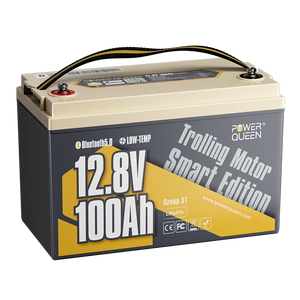
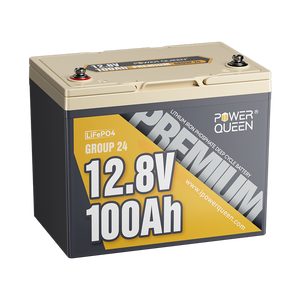
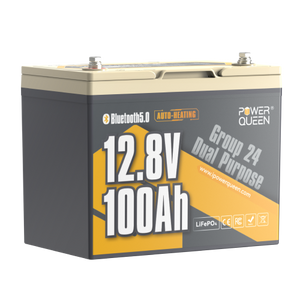
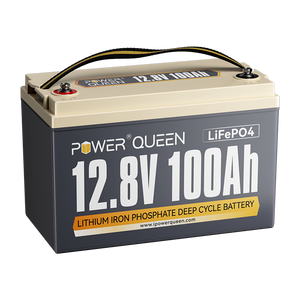
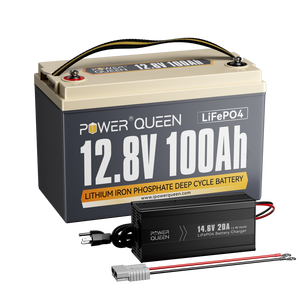
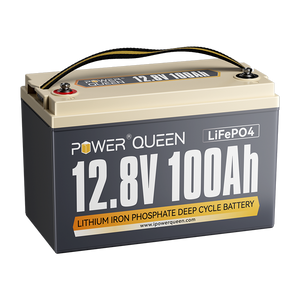
Volts to watts conversion helps determine power usage, but runtime is ultimately defined by the battery system delivering that power. In battery-based setups, a common reference point is a 12V 100Ah lithium battery, which provides a clear and practical baseline for estimating runtime.
A 12V 100Ah lithium battery stores approximately 1,200 watt-hours (Wh) of energy. This value is calculated by multiplying nominal voltage by capacity and represents how much power the battery can deliver over time under ideal conditions.
Estimated Runtime (hours) = Battery Capacity (Wh) ÷ Load Power (W)
For example, a 12V 100Ah lithium battery powering a 50W device can theoretically operate for about 24 hours. If the same battery powers a 100W device, the estimated runtime drops to roughly 12 hours under continuous load.
This is why watts alone are not enough when planning battery-powered systems. Watts describe how much power is used at a moment, while battery capacity determines how long that power can be sustained. Deep-cycle lithium batteries, such as 12V 100Ah configurations commonly used in Power Queen systems, are designed for stable, continuous discharge rather than short-duration bursts.
Different battery voltages with similar amp-hour ratings can deliver very different runtime results. The comparison below shows how common lithium battery configurations translate into usable energy and estimated runtime at the same power load.
| Battery Configuration | Nominal Voltage | Capacity (Ah) | Energy Capacity (Wh) | Estimated Runtime @ 100W Load |
|---|---|---|---|---|
| 12V 100Ah Lithium Battery | 12 V | 100 Ah | ≈ 1,200 Wh | ≈ 10–12 hours |
| 24V 128Ah Lithium Battery | 24 V | 128 Ah | ≈ 3,072 Wh | ≈ 26–30 hours |
| 36V 100Ah Lithium Battery | 36 V | 100 Ah | ≈ 3,600 Wh | ≈ 30–36 hours |
Although amp-hour values may appear similar, voltage has a major impact on total energy and runtime. Higher-voltage battery systems deliver more watt-hours, which directly translates into longer runtime at the same power load.
In real-world use, actual runtime is always shorter than theoretical estimates. Energy losses occur in inverters, cabling, and power conversion stages, reducing usable capacity.
Most lithium battery systems deliver about 80 to 90 percent of their rated energy under continuous discharge. This means a 12V 100Ah lithium battery typically provides 960 to 1,080 Wh of usable energy.
A more realistic runtime calculation accounts for efficiency:
Adjusted Runtime (hours) = Battery Capacity (Wh) × Efficiency ÷ Load Power (W)
For instance, a 12V 100Ah lithium battery powering a 100W load at 85 percent efficiency will operate for roughly 10 hours, rather than the full 12 hours suggested by ideal calculations.
Runtime calculations apply to continuous loads, not startup surges. Devices such as refrigerators, power tools, and air conditioners may draw significantly higher power for a short time when starting.
While brief startup surges do not greatly reduce total runtime, the battery system must be capable of delivering that surge current without voltage collapse. Lithium batteries designed for stable discharge characteristics, including those used in Power Queen systems, are engineered to handle both sustained loads and short surge demands reliably.
When estimating runtime, always consider continuous wattage, surge wattage, inverter efficiency, and the discharge capabilities of the battery system—not watts alone.

To achieve longer runtime or higher power output, you may need to combine multiple batteries. Understanding the difference between series and parallel connections is the key to building the right setup.
Frequently Asked Questions
How Many Volts Are in a Watt?
There is no fixed number of volts in a watt. Volts measure electrical potential and watts measure power, so you can only convert between them when you also know current or resistance.
Can You Convert Volts to Watts Without Current?
No, volts alone are not enough to calculate watts. To complete a volts to watts conversion, you must know current in amps or resistance in ohms.
What Is the Difference Between Watts and Volt-Amps?
Watts measure real power, while volt-amps measure apparent power in AC systems. The relationship between them depends on power factor, which indicates how efficiently electrical energy is converted into usable work.
Is 1 Volt Equal to 1 Watt?
No, volts and watts are not interchangeable units. One watt occurs only when one volt drives one amp of current, and most real-world loads do not fit a one-to-one assumption.
Why Do Devices List Watt Ratings Instead of Volts?
Watt ratings tell you how much power a device actually consumes. This makes it easier to estimate energy use, compare devices, and confirm whether a circuit, power station, or inverter can safely support the load.
Final Takeaway
Volts to watts conversion is the quickest way to turn electrical specs into practical decisions. When you choose the correct formula, use power factor for AC when needed, and account for safety limits and surge loads, you can size power sources and protect equipment with confidence.
The best habit is to treat watts as your planning number. Watts translate directly into load sizing, runtime estimates, and system capacity, which is why they matter in everyday American use cases like home appliances, charging, and solar power.
Power Queen focuses on lithium battery systems designed for stable power delivery and long-term reliability. With a range of 12V, 24V, and higher-voltage lithium battery solutions, Power Queen products are built to support real-world power needs where accurate watts calculation, reliable runtime, and consistent discharge performance matter. Whether used in backup power, off-grid setups, or mobile energy systems, Power Queen batteries are engineered to turn power calculations into dependable everyday use.