









Deep Cycle Battery: Everything You Need to Know
Deep cycle batteries are the essential power source for sustained, reliable energy in applications from RVs to off-grid solar systems. Understanding the differences in battery types, their maintenance needs, and true capacity is vital for maximizing system performance and longevity.
This comprehensive guide explores the technology, applications, and economics of deep cycle batteries, ensuring you have the knowledge to make an informed choice for your power needs.
What Is a Deep Cycle Battery?
Deep cycle batteries provide steady, reliable power for everything from RVs to off grid solar systems. Unlike standard car batteries, they are built to handle repeated deep discharges and recharges, making them a dependable choice for long duration electricity use. Knowing the main battery types, basic maintenance needs, and usable capacity helps you get better performance and a longer service life.
This guide explains how deep cycle batteries work, where they are used, and how to choose the right option for your power setup..
Difference Between a Deep Cycle Battery and a Regular Battery
The primary distinction between a deep cycle battery and a regular, or starting, battery lies in their intended function and internal plate structure. While both store electrical energy, they are designed for entirely different roles within a power system.
The "Sprinter" vs. The "Marathon Runner"
A regular car battery, or starting, lighting, and ignition (SLI) battery, is the "sprinter" of the battery world, designed to deliver a massive surge of current, known as Cold Cranking Amps (CCA), for a few seconds to start an engine. Its thin plates maximize surface area for this quick power delivery, but they are highly susceptible to damage if discharged by more than a small percentage, typically 2% to 5%.
Conversely, a deep cycle battery is the "marathon runner," built for endurance. It is designed to be the sole source of power for a system over many hours, delivering a steady, lower current. Its thicker plates are designed to prevent material shedding and degradation during repeated deep discharges, ensuring a long cycle life. This robust design sacrifices the high CCA of a starting battery for superior endurance and longevity under continuous use.
Depth of Discharge (DoD) Explained
Depth of Discharge is the most critical metric differentiating the two battery types, representing the percentage of the battery's capacity that has been removed. A starting battery is never meant to exceed a minimal DoD, whereas a deep cycle battery is engineered to handle significant DoD levels. For traditional lead-acid deep cycle batteries, manufacturers typically recommend limiting the DoD to 50% to maximize the battery's lifespan. However, modern lithium iron phosphate (LiFePO4) deep cycle batteries can safely handle a DoD of 80% to 100% without any detrimental effects on their cycle life.
| Feature | Deep Cycle Battery | Starting (SLI) Battery |
|---|---|---|
| Primary Function | Sustained, low-current power over time | Short, high-current burst to start engine |
| Plate Structure | Thicker, denser plates | Thinner, more porous plates |
| Typical DoD | 50% (Lead-Acid) to 100% (Lithium) | 2% to 5% |
| Key Rating | Amp-Hours (Ah) | Cold Cranking Amps (CCA) |
| Applications | RVs, Boats, Solar Storage, Trolling Motors | Car, Truck, and Engine Starting |
💡 Read More: Deep Cycle Battery vs Starting Battery: Which One Is Right for You?
Types of Deep Cycle Batteries
The deep cycle battery market is primarily divided into three main chemical compositions, each offering a unique balance of cost, performance, and maintenance requirements.
Flooded Lead-Acid (FLA) Batteries
Flooded lead-acid batteries, or wet cell batteries, are the oldest and most cost-effective deep cycle option. These batteries contain a liquid electrolyte solution that requires regular maintenance, specifically topping off with distilled water periodically.
Pros
- Lowest initial cost of all deep cycle battery types.
- Can be "equalized" with a controlled overcharge to reverse sulfation.
- Widely available and easy to recycle.
Cons
- Requires regular maintenance (watering).
- Must be kept upright and requires ventilation due to hydrogen gas release.
- Lowest cycle life and usable capacity (50% DoD limit).
Valve Regulated Lead-Acid (VRLA): AGM and Gel
Valve Regulated Lead-Acid batteries are a sealed, maintenance-free evolution of the lead-acid design, eliminating the need for watering and reducing the risk of acid spillage. This category includes two main types: Absorbed Glass Mat (AGM) and Gel Cell batteries.
Pros
- Maintenance-free and spill-proof, making them safe for use in enclosed spaces.
- Highly resistant to vibration and shock (especially AGM).
- Better performance in cold temperatures than FLA.
Cons
- Higher initial cost than FLA batteries.
- Sensitive to overcharging, which can permanently damage the battery.
- Gel batteries require a slower charge rate, limiting high-current applications.
Lithium Iron Phosphate (LiFePO4) Batteries
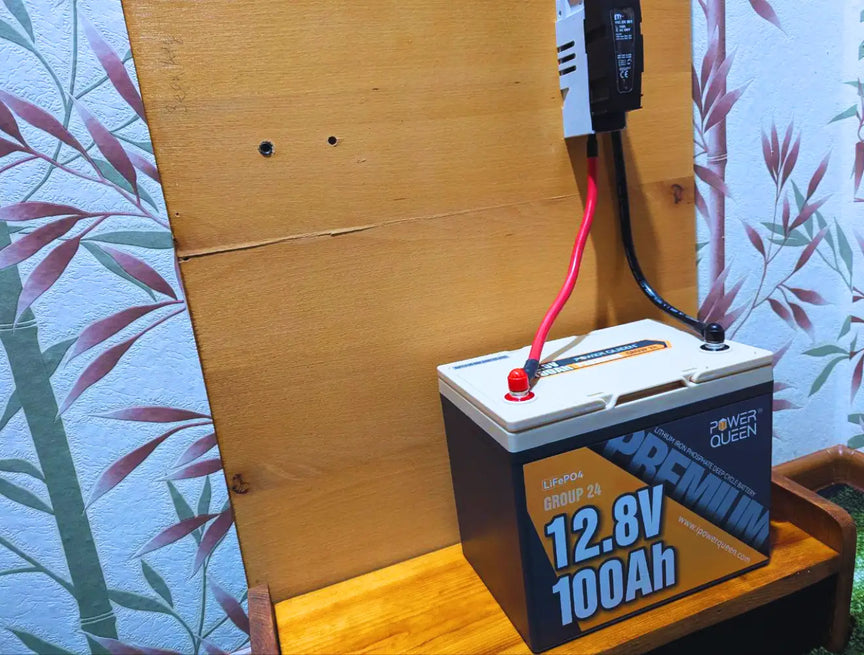
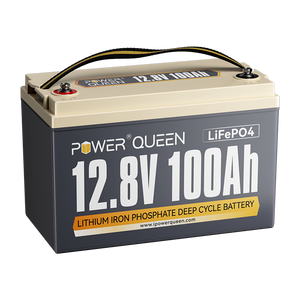
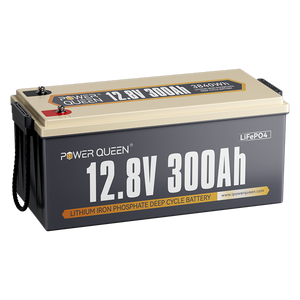
Lithium Iron Phosphate, or LiFePO4, batteries represent the cutting edge of deep cycle technology, offering significant advantages in performance, weight, and lifespan. While the initial purchase price is higher, their longevity, efficiency, and zero maintenance requirements often result in a lower total cost of ownership over the battery's service life.
Pros
- Lightweight and Energy-Dense: Often weigh less than half of a comparable lead-acid battery.
- High Usable Capacity: Can be discharged to a near 100% DoD without degradation.
- Long Cycle Life: Typically exceed 3,500 to 5,000 cycles.
- Zero Maintenance: Managed by an internal Battery Management System (BMS).
Cons
- Highest initial purchase price.
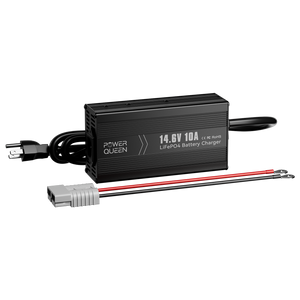
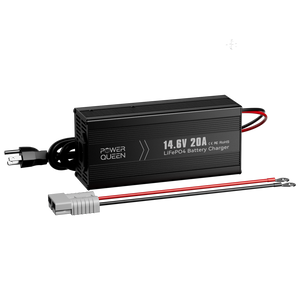
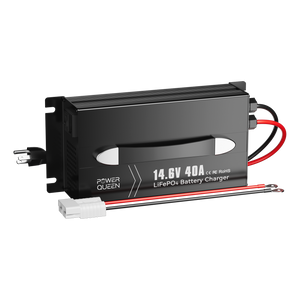
- Requires a specialized charger or charging profile.
- Cannot be charged below freezing temperatures without a built-in heating element.
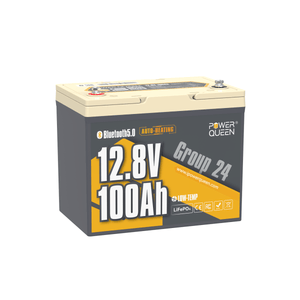
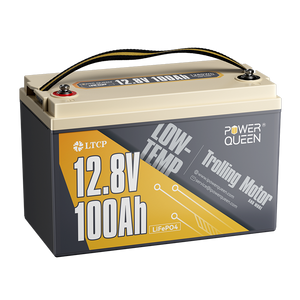
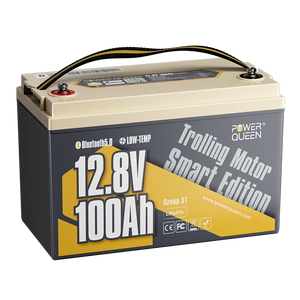
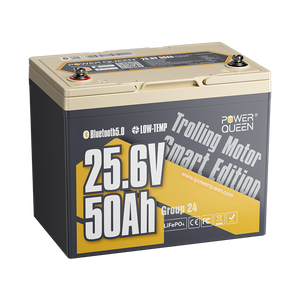
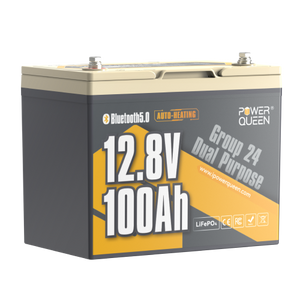
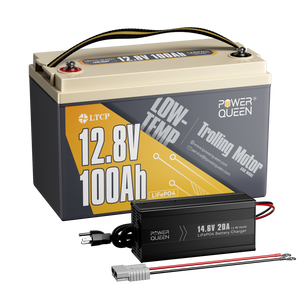
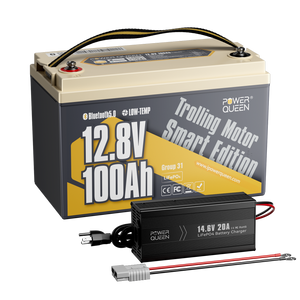
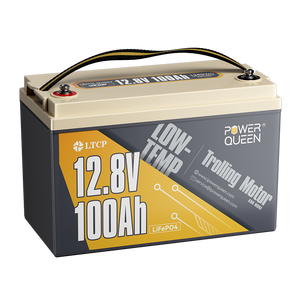
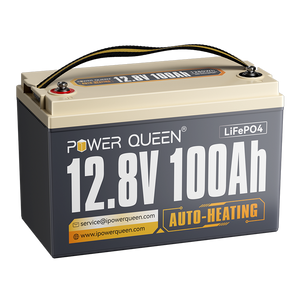
That’s where the Power Queen Self-Heating Lithium Battery stands out. It automatically warms the cells in cold weather so charging can start safely, making it a smart choice for winter camping, RVs, off-grid solar, and other cold-climate deep cycle setups.

Want to understand why lithium is redefining deep cycle power?
Read Deep Cycle Redefined: Why Lithium is the Modern Alternative to Lead Acid to see how modern lithium batteries outperform traditional lead-acid in real-world applications.
What Deep Cycle Battery Has More Capacity?
When evaluating which deep cycle battery has "more capacity," it is essential to look beyond the nominal Amp-Hour (Ah) rating and focus on the usable capacity, which is the amount of energy you can actually draw from the battery without causing damage.
Usable Capacity: The Real Metric
The usable capacity is fundamentally determined by the safe Depth of Discharge (DoD) for a given battery chemistry. For a 100 Ah lead-acid battery, the recommended maximum DoD of 50% means you can only safely use 50 Ah of energy. In contrast, a 100 Ah LiFePO4 battery can be safely discharged to 100% DoD, providing the full 100 Ah of usable energy. Therefore, a 100 Ah lithium battery effectively provides the same usable energy as a 200 Ah lead-acid battery, making lithium the clear winner in terms of energy density and practical capacity.
💡 Read More: AGM vs Lithium Ion Backup Batteries: Why Some Systems Lose Power at 50%.
The Impact of Discharge Rate on Capacity
The rate at which the battery is discharged, a phenomenon described by Peukert's Law, significantly affects the capacity of lead-acid batteries. The faster a lead-acid battery is discharged, the less total energy it can deliver. Lithium Iron Phosphate batteries are largely immune to this effect. Their capacity remains virtually constant regardless of the discharge rate, meaning they can deliver their full rated capacity even under high-current loads, which is a critical advantage for high-power applications like air conditioners or induction cooktops in an RV.
How Long Do Deep Cycle Batteries Last?
The lifespan of a deep cycle battery is measured in two ways: cycle life and calendar life, both of which are heavily influenced by the battery's chemistry and how it is used.
Cycle Life and Depth of Discharge
Cycle life refers to the number of charge and discharge cycles a battery can perform before its capacity drops below 80% of its original rating. This metric is directly tied to the DoD. Discharging a lead-acid battery to 50% DoD might yield 500 to 1,000 cycles, but discharging it to 80% DoD could reduce that to as few as 200 cycles. LiFePO4 batteries offer a vastly superior cycle life, typically 3,500 to 5,000 cycles at 100% DoD, translating to a service life of a decade or more in many applications. Calendar life is also significantly longer for lithium batteries, often exceeding 10 years, compared to 3 to 7 years for lead-acid batteries.
Calculating Run Time with an Inverter
The question of "How long will a deep cycle battery last with an inverter?" is answered by calculating the battery's usable energy and the load's power consumption.
To estimate the run time, you must first calculate the total usable Watt-hours (Wh) of your battery bank:
For example, a 12-volt, 100 Ah LiFePO4 battery (100% DoD) with a 90% efficient inverter has a usable energy of: 12V × 100 Ah × 1.0 × 0.90 = 1,080 Wh.
If you are running a 500-watt load, the estimated run time is:
1,080 Wh ÷ 500 W = 2.16 hours.
For a 100 Ah lead-acid battery, the 50% DoD limit cuts the usable Wh in half, resulting in a run time of only 1.08 hours for the same load. This calculation demonstrates why lithium batteries are often preferred for inverter-based systems.
Uses of Deep Cycle Batteries
Deep cycle batteries are indispensable in any application that requires reliable, sustained power away from the main electrical grid. Common applications include:
- Off-Grid and Renewable Energy Systems: Storing solar and wind power for continuous, reliable supply to homes, cabins, and remote stations.
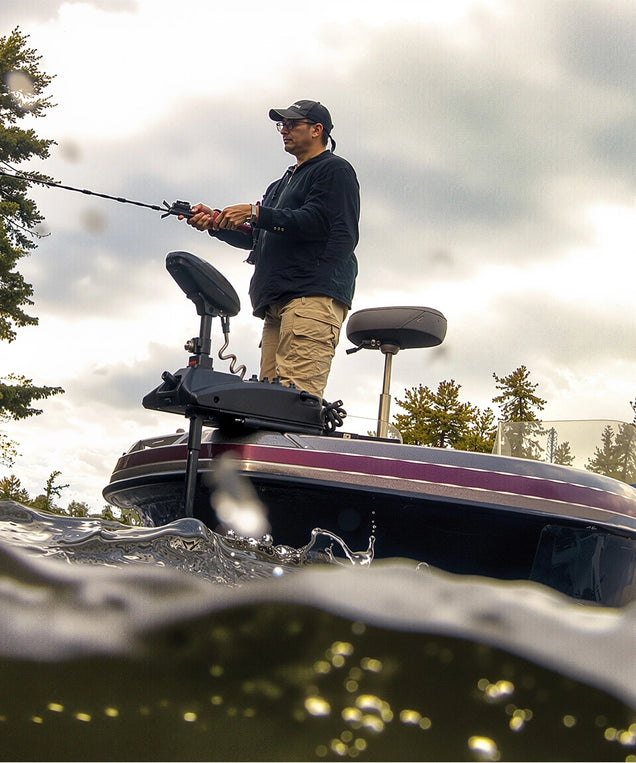
- Marine and Recreational Vehicle Power: Powering "house" amenities like lights, refrigerators, and water pumps in boats and RVs.
- Electric Vehicles: Providing power for golf carts, electric wheelchairs, and certain industrial equipment.
- Backup Power: Serving as uninterruptible power supplies (UPS) for critical systems during outages.
Not sure which lithium deep cycle battery fits your needs? Check out our application guides to find the right Power Queen LiFePO4 battery for your setup.

Maintaining Your Deep Cycle Battery
Proper maintenance is the single most important factor in determining the lifespan of a deep cycle battery, though the required effort varies dramatically by battery type.
Essential Maintenance for Lead-Acid Batteries
Flooded lead-acid batteries require the most hands-on maintenance. This includes:
- Regularly checking electrolyte levels and adding distilled water.
- Keeping battery terminals clean and free of corrosion.
- Never leaving the battery in a discharged state to prevent sulfation.
- Performing a regular "equalization" charge to reverse sulfation.
The Low-Maintenance Advantage of Lithium
One of the most compelling benefits of LiFePO4 batteries is their near-zero maintenance requirement. They do not require watering, terminal cleaning, or equalization charges. Each lithium battery contains an internal Battery Management System (BMS) that actively monitors voltage, temperature, and current, protecting the cells from overcharging, over-discharging, and short circuits. This integrated system automates all necessary protective measures, allowing the user to simply install the battery and rely on its performance.
What Is a Downside of Using Deep Cycle Batteries?
While deep cycle batteries are superior for sustained power, they do have specific drawbacks. The main downside of lead-acid deep cycle batteries is their weight and the need for careful charging to avoid damage. They are significantly heavier than lithium batteries, which can be a major disadvantage in weight-sensitive applications like RVs or small boats. For lithium batteries, the primary downside is the high initial purchase price. Although the total cost of ownership is lower, the upfront investment can be a barrier for some consumers.
| Metric | Flooded Lead-Acid (FLA) | AGM Lead-Acid | Lithium Iron Phosphate (LiFePO4) |
|---|---|---|---|
| Initial Cost | Lowest | Medium | Highest |
| Usable Capacity | ~50% of Ah Rating | ~50% of Ah Rating | 80% to 100% of Ah Rating |
| Cycle Life | 500 - 1,000 | 600 - 1,200 | 3,500 - 5,000+ |
| Maintenance | High (Watering, Cleaning) | Low (None) | None (BMS Managed) |
| Weight | Heaviest | Heavy | Lightest |
| TCO (10 Years) | High (Due to replacement) | Medium-High | Lowest |
FAQs
How often should I charge my deep cycle battery?
You should charge your deep cycle battery immediately after use, especially if it is a lead-acid type, to prevent sulfation and maximize its lifespan. Never leave a lead-acid battery in a discharged state for more than a few days. Lithium batteries are more forgiving and can be left at a partial state of charge, but they should still be charged regularly to maintain readiness.
Can I use a car charger on a deep cycle battery?
You should only use a car charger on a deep cycle battery if it is a modern, multi-stage charger with a specific deep cycle or AGM setting. Standard, single-stage car chargers are often designed to quickly top off a starting battery and may overcharge or damage a deep cycle battery, particularly a Gel or LiFePO4 type, which require precise voltage control.
Is it safe to mix different types of deep cycle batteries?
It is generally unsafe and highly discouraged to mix different types of deep cycle batteries, such as connecting a lead-acid battery in parallel with a lithium battery. Different chemistries have different charging voltages, discharge characteristics, and internal resistances. Mixing them can lead to one battery overcharging or over-discharging the other, resulting in damage, reduced capacity, and potential safety hazards.
What is the best way to prevent a deep cycle battery from freezing?
The best way to prevent a deep cycle battery from freezing is to keep it fully charged. A fully charged lead-acid battery has a much lower freezing point (around -70°F or -57°C) than a discharged one (which can freeze at 20°F or -6°C). Lithium batteries are generally safe from freezing, as their internal Battery Management System will prevent charging when temperatures drop below freezing.
What is the most significant content gap in deep cycle battery guides?
The most significant content gap is often a detailed Total Cost of Ownership (TCO) analysis that accurately compares the long-term economics of lead-acid versus lithium batteries. Most guides focus only on the initial purchase price, which favors lead-acid. However, when factoring in the cost of replacement batteries, the energy lost due to lower efficiency, and the cost of maintenance over a 10-year period, the higher-priced lithium battery often proves to be the more economical choice.
Conclusion
Choosing the right deep cycle battery is a decision that significantly impacts the reliability and efficiency of your power system. While lead-acid batteries offer a lower initial cost, the long-term benefits of lithium iron phosphate (LiFePO4) technology—including superior usable capacity, minimal maintenance, and a dramatically longer cycle life—often make them the more economical and practical choice over the lifespan of the system. By understanding the differences in chemistry, capacity, and maintenance requirements, you can select a deep cycle battery that not only meets your immediate power needs but also provides dependable, long-lasting performance for years to come.