








Can I Charge a LiFePO4 Lithium Battery with a Normal Charger?
You can technically use a normal lead acid charger to charge a lithium battery, but it is not recommended for long-term use due to mismatched charging profiles and safety risks. While a standard charger may provide a temporary jump, it lacks the precision to fully top off a Lithium Iron Phosphate (LiFePO4) battery and can even trigger the Battery Management System (BMS) to shut down.
To ensure your investment lasts its promised 10 years, using a dedicated lithium charger is the only way to guarantee a 100% state of charge and proper cell balancing.
Can I Charge a Lithium Battery with a Normal Charger
A normal charger will work in a pinch, but it will rarely charge a lithium battery to its full potential. Most lead acid chargers are designed to reach a certain voltage and then drop into a "float" mode that is too low for lithium chemistry. For example, a standard 12V automotive charger might only bring a LiFePO4 battery to 80% capacity before it stops.
For a deeper dive into the specifics of this process, check out our [Answered] Can I Charge a Lifepo4 Battery With a Lead Acid Charger guide.
What Happens When You Use a Normal Charger on a Lithium Battery
Using a standard charger often leads to an incomplete charge or a "tripped" battery protection circuit. Many chargers sold at U.S. retailers like AutoZone include a "desulfation" mode that sends high-voltage pulses to clean lead plates. If your lithium battery’s BMS detects these spikes, it will instantly disconnect the battery. This is why many users switch to a Power Queen dedicated lithium charger, which eliminates these dangerous voltage spikes and ensures a smooth, constant current flow.
When a Standard Charger May Work Temporarily
A standard charger is only safe for lithium if it has an AGM or Gel setting and no automatic desulfation mode. If you find yourself at a campsite in the Sierra Nevadas with a dead lithium house battery and only an old-school shop charger, you can use it as a stopgap. However, you must monitor the voltage constantly and unplug it the moment the battery hits 14.4V to prevent the charger from entering a long, stressful "absorption" phase.
Situations Where a Normal Charger Can Cause Problems
The primary danger arises when a normal charger remains connected after the battery is full. Lead acid batteries thrive on a "trickle" or "maintenance" charge to combat self-discharge, but lithium batteries have a very low self-discharge rate.
If you are wondering about the specifics of low-amp maintenance, read more on Can You Charge A Lithium Battery With A Trickle Charger to understand the long-term impact on cell health.
Understanding How LiFePO4 Lithium Batteries Charge
LiFePO4 batteries require a constant current/constant voltage (CC/CV) charging logic to maintain their internal stability. Unlike the older lead acid technology found in most American pickup trucks, lithium batteries are highly efficient and want to take in as much current as possible until they hit their upper voltage limit. According to data from the National Renewable Energy Laboratory (NREL), precise voltage control is critical for the safety and performance of lithium-ion chemistries.
For comprehensive instructions on this chemistry, refer to our [Full Guide] How to Charge LiFePO4 Batteries.

Why Lithium Batteries Need a Different Charging Profile
Lithium chemistry requires a "clean" power delivery without the voltage fluctuations used to stir up electrolyte in lead acid batteries. Lead acid batteries often need an "equalization" charge—a controlled overcharge—to prevent acid stratification. If you apply this same logic to a lithium battery, you are essentially forcing energy into a full cup, which causes the internal cells to overheat and degrade rapidly.
Voltage Requirements for Charging Lithium Batteries
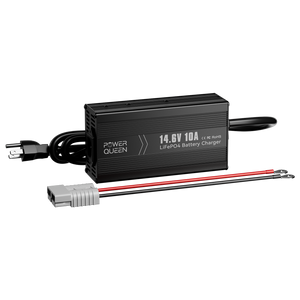
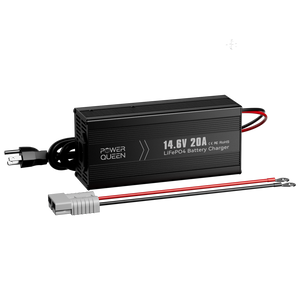
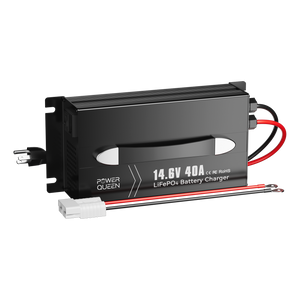
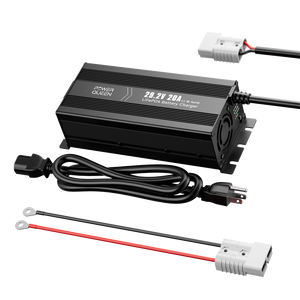
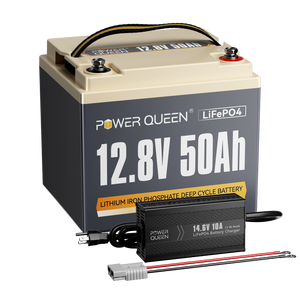
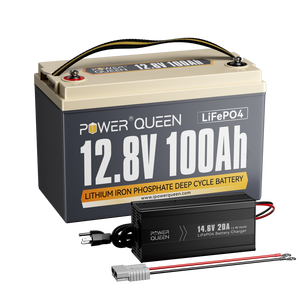
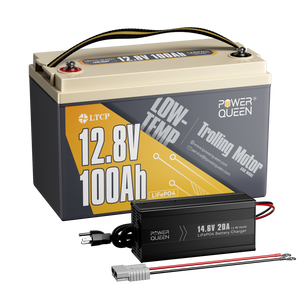
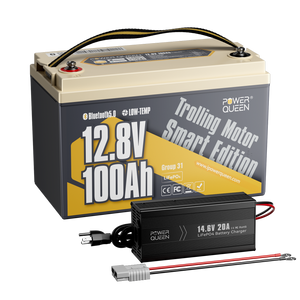
A 12V LiFePO4 battery needs a charger that can consistently hit between 14.2V and 14.6V to achieve a full charge. If your charger peaks at 13.8V (a common "float" voltage for a DieHard lead acid battery), your lithium battery will never reach its full capacity. Using a Power Queen 20A or 40A LiFePO4 charger ensures you always hit the 14.6V target, allowing the internal BMS to balance the cells properly.

Why Choose a Dedicated Power Queen Lithium Charger
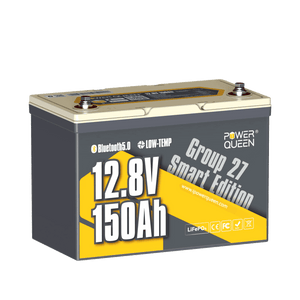
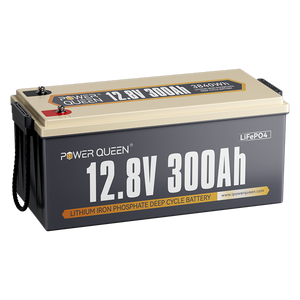
Power Queen LiFePO4 chargers are specifically engineered to optimize the lifespan and performance of lithium batteries through precision engineering. These chargers feature a unique 0V charging function that can "wake up" a BMS that has entered sleep mode due to over-discharge—a common problem that leaves standard chargers useless. With a built-in intelligent three-stage charging algorithm and multiple safety protections against over-temperature and short circuits, these chargers provide the most efficient and safest path to a full battery.

Charging Lithium Batteries in Different Applications
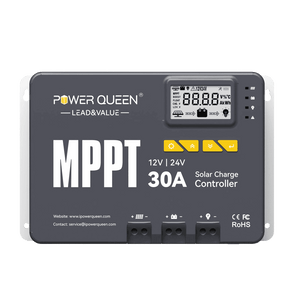
The source of your power—whether from the grid, an alternator, or the sun—dictates what safety hardware you need. In off-grid setups, managing raw power is essential. If you are considering a solar setup, you must understand why hardware is required by reading Can You Charge Solar Batteries without Charge Controller? to avoid damaging your cells with unregulated voltage.
Comparison Table of Lithium Chargers vs Normal Chargers
| Feature | Power Queen LiFePO4 Charger | Normal (Lead Acid) Charger |
|---|---|---|
| Logic Type | Constant Current / Constant Voltage | Multi-stage (Bulk/Absorb/Float) |
| Peak Voltage | Fixed (14.4V - 14.6V) | Variable (up to 15.5V in Repair) |
| BMS Wake-up | Yes (0V Charging Function) | No |
| Life Extension | Maximizes (5000+ cycles) | Reduces (2000-3000 cycles) |
Common Mistakes When Charging Lithium Batteries
The most common mistake is assuming that "a battery is a battery" and that any 12V source will work safely. This mindset often leads to owners using ancient "buzz box" chargers from the 1970s. According to the MIT Electric Vehicle Team, maintaining strict voltage boundaries is the single most important factor in preventing lithium-ion battery instability.
Frequently Asked Questions About Charging Lithium Batteries
Can I Charge a Lithium Battery with a Car charger?
Yes, but only if it is a "dumb" charger without a desulfation mode and you disconnect it manually at 14.4V. You should never leave a car charger connected to a lithium battery overnight. For peace of mind, a Power Queen portable lithium charger is a safer and more efficient alternative for travelers.
What Happens If I Use the Wrong Charger?
The battery's BMS will likely shut down to protect the cells, or the battery will simply fail to reach 100% capacity. Over time, using the wrong charger will cause cell imbalance, leading to a significant drop in usable run-time.
Do LiFePO4 Batteries Need a Special Charger?
Ideally, yes, because only a lithium-specific charger can properly balance the cells and provide the correct CC/CV profile. Using a dedicated charger like those from Power Queen is the best "insurance policy" for your expensive battery.
Can a Smart Charger Automatically Detect Lithium Batteries?
Some high-end chargers can, but it is always safer to manually select the "Lithium" or "LiFePO4" mode. Auto-detection can sometimes fail if the battery voltage is too low, leading the charger to use the wrong settings.
Is It Safe to Leave a Lithium Battery Charging Overnight?
It is only safe if you are using a dedicated lithium charger with an automatic shut-off feature. If you are using a repurposed lead acid charger, it is not safe and could lead to battery damage or safety hazards.