









RV Battery Size Chart Guide: Group 24 vs 27 vs 31
This rv battery size chart is for you if you are replacing an RV house battery and want to pick the right size the first time. Group 24, Group 27, and Group 31 can be confusing because the numbers sound like performance ratings, but they are mainly case size (fitment) labels. The group number answers what fits, then capacity and battery type help you decide how long it lasts.
Below, you will see the key size differences, typical capacity ranges, and what each option feels like during real camping. You will also find a simple fitment checklist and a usable capacity table so you do not get misled by the amp hour number on the label.
RV Battery Size Chart: Group 24 vs 27 vs 31 Comparison Table
The quickest way to compare Group 24 vs 27 vs 31 is to look at dimensions and typical capacity ranges. Dimensions matter because many RV battery boxes and trays have tight clearance, especially on travel trailer tongues. Capacity matters because it influences how long you can run essential 12V loads such as lights, water pump, vent fans, furnace blower, and control boards. The table below gives practical planning ranges, while remembering that exact numbers vary by brand and battery chemistry.
| Battery Group | Approx Dimensions (L × W × H) | Typical Lead Acid Capacity (Ah) | Typical Lithium Capacity (Ah) | Typical Weight (Lead Acid) | Typical Weight (Lithium) | Best For |
|---|---|---|---|---|---|---|
| Group 24 | 10.25 × 6.8 × 8.9 in | 70 to 85Ah | 80 to 100Ah | 40 to 50 lb | 18 to 25 lb | Hookups, short trips, light power use |
| Group 27 | 12.1 × 6.8 × 8.9 in | 85 to 105Ah | 100Ah common | 50 to 60 lb | 23 to 30 lb | Weekend boondocking, balanced upgrades |
| Group 31 | 13.0 × 6.8 × 9.4 in | 100 to 130Ah | 100 to 150Ah | 60 to 75 lb | 26 to 40 lb | Longer off grid camping, inverter support |
Note that two batteries can share the same group size while having different amp hour ratings, terminal layouts, and heights. Group size helps you confirm fitment, and the spec sheet tells you what a specific model can do.
If you’re looking for a deep comparison of Group 24, 27, and 31 dimensions, capacities, and applications, check out👉 Deep Cycle Battery Sizes Guide: BCI Group 24, 27 & 31 Size Chart.
What Group 24, 27, and 31 Mean for Fitment
In North America, Group 24, Group 27, and Group 31 are fitment standards. They describe general case dimensions and typical terminal layout so you can match a battery to your RV tray or battery box. That is why the same camper can only accept certain group sizes without changing the box or mounting hardware.
For many travel trailers, the plastic tongue box is the limiting factor, and it commonly fits Group 24 or Group 27. Larger compartments on fifth wheels and motorhomes can often fit Group 31 or multiple batteries. Treat group size as your fit decision first, then choose capacity and battery type to match your camping needs.

What Size Battery Do I Need for My Camper
If you are asking what size battery do I need for my camper, start with how you camp. Hookups change everything because your converter supplies power and charges the battery. Dry camping and boondocking push the battery into a primary role where it must support your 12V loads and sometimes an inverter for AC loads. Temperature matters too because furnace runtime can become the dominant load in cold weather.
| Camping Style | Recommended Minimum | Better Choice | Best Choice |
|---|---|---|---|
| Mostly RV parks with hookups | Group 24 deep cycle | Group 27 AGM | Group 27 lithium |
| One to two nights boondocking | Group 27 deep cycle | Group 31 deep cycle | Group 31 100Ah lithium |
| Two to four nights boondocking | Group 31 deep cycle | Two Group 27 in parallel | Two Group 27 125ah lithium batteries |
| Regular inverter use | Not ideal on small lead acid setups | Large lithium bank | Large lithium bank with solar support |
If you want a quick rule of thumb, Group 27 is the most practical upgrade for many travel trailers because it often fits common trays and provides a noticeable step up from Group 24. Group 31 is a strong choice if you dry camp often or run the furnace a lot, as long as it fits your tray and battery box safely.

Group 24 vs 27 vs 31: Which One Fits Your Camping Style
Comparing Group 24 vs 27 vs 31 makes the most sense when you translate specs into camping outcomes. Think in terms of nights of comfort, not just amp hours. A larger group size can give you more time between charges, but the impact depends on your loads and how often you can recharge.
Group 24: Light Use and Short Stays
Group 24 is a common factory installed size on many entry level trailers. It is usually enough for lights, water pump, propane appliance control boards, and basic phone charging for a short stay. The limitation shows up when you dry camp, especially in cold weather. Furnace blowers can draw significant current, and a smaller battery can dip faster than expected overnight.
Group 27: Balanced Power for Most RV Owners
Group 27 is often the best overall balance. It typically offers a meaningful increase in capacity over Group 24 while still fitting many standard trays. For weekend boondocking, Group 27 can feel like a comfort upgrade because it reduces the need to ration lights and fans. It also works well as the base of a two battery setup when space allows.
Group 31: Longer Off Grid Time If You Have the Space
Group 31 is a strong option when you want the longest runtime from a common single battery footprint. It is especially useful for longer stays, heavier daily use, and trips where the furnace runs for hours. The tradeoffs are weight and fitment. Confirm tray length, height clearance, and secure mounting because towing vibration is not forgiving.
Rated Ah vs Usable Capacity: Why Battery Type Changes Runtime
One of the biggest mistakes RV owners make is choosing based only on the amp hour number printed on the label. Amp hours describe total rated capacity under specific test conditions. What matters for camping is usable capacity, meaning how much energy you can safely take out without shortening battery life or losing voltage stability. Different battery types have different safe discharge depths, and that changes your real runtime.
| Battery Type | Typical Safe Usable Percentage | Example Rated Capacity | Usable Capacity You Can Count On |
|---|---|---|---|
| Flooded Lead Acid | About 50% | 100Ah | About 50Ah usable |
| AGM Deep Cycle | About 50 to 60% | 100Ah | About 50 to 60Ah usable |
| Lithium LiFePO4 | About 80 to 100% | 100Ah | About 80 to 100Ah usable |
This is why many RV owners feel like one lithium battery can replace two lead acid batteries in real use. Lithium typically delivers more usable energy and holds voltage steadier as it discharges, which can keep RV electronics running more reliably under higher loads.
💡 Read more: AGM vs Lithium Ion Backup Batteries: Why Some Systems Lose Power at 50%
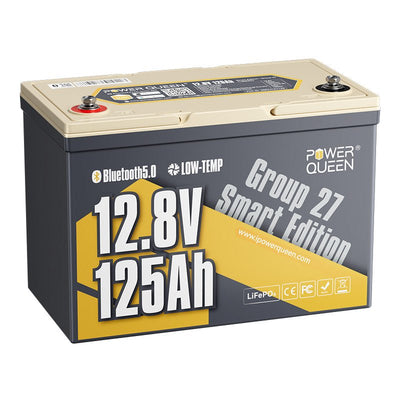
Power Queen Group 24 vs 27 vs 31 Lithium Batteries: Recommended Picks
Once you understand usable capacity, upgrading to lithium becomes an easy decision for many RVers. The next step is choosing a battery that fits your existing tray and matches your camping style. Power Queen offers lithium options in common RV group sizes, making it easier to upgrade without redesigning your whole battery compartment.
| BCI Group Number | Group Dimensions (L × W × H, inches) | Typical Lead Acid Capacity Range | Common RV Uses | Recommended Power Queen Lithium Battery |
|---|---|---|---|---|
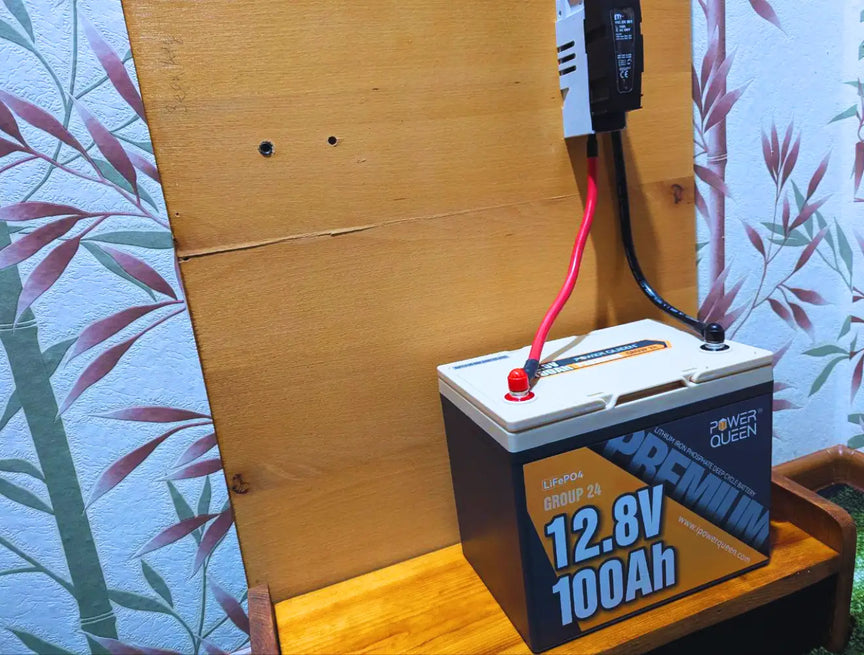
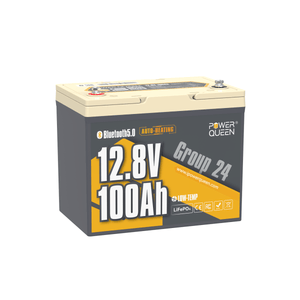
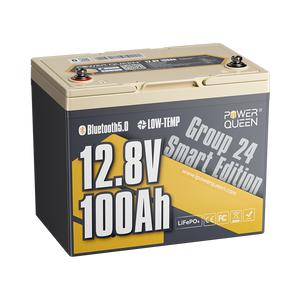
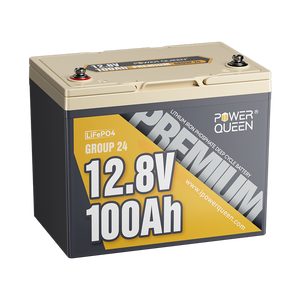
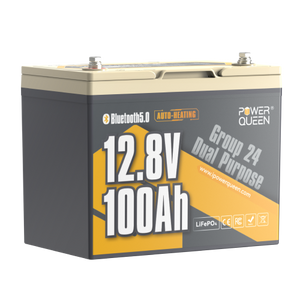
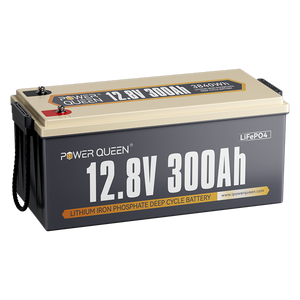
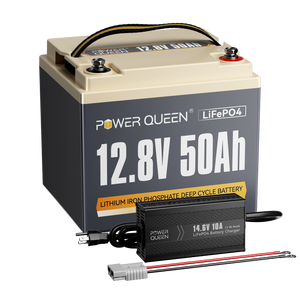
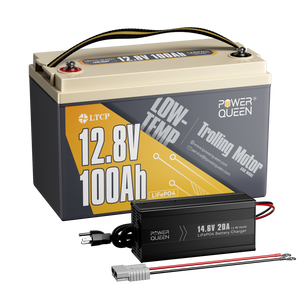
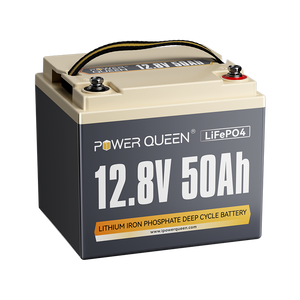
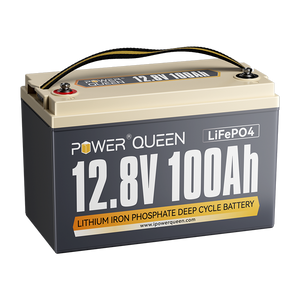
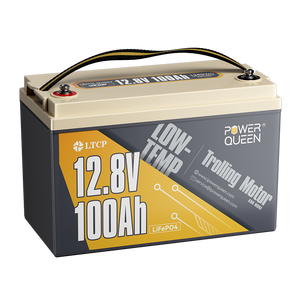
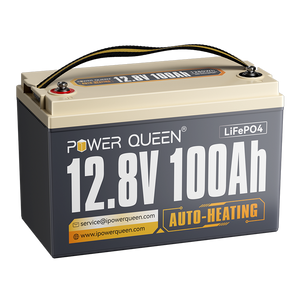
| Group 24 Lithium Battery | 10.24 × 6.61 × 8.27 | 70 to 85Ah | Smaller RVs and compact battery boxes | Power Queen 12V 100Ah Group 24 LiFePO4 Battery |
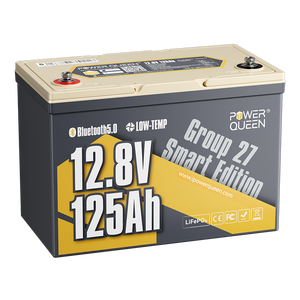
| Group 27 Lithium Battery | 12.13 × 6.69 × 8.31 | 85 to 105Ah | Many travel trailers and mid size RVs | Power Queen 12V 125Ah Group 27 LiFePO4 Battery |
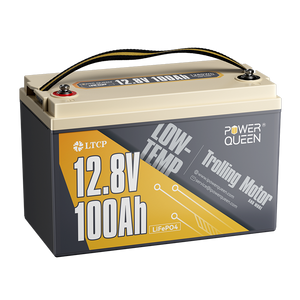
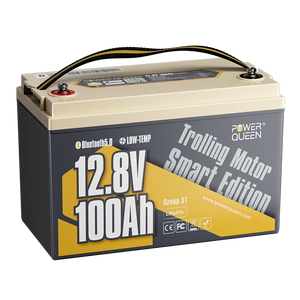
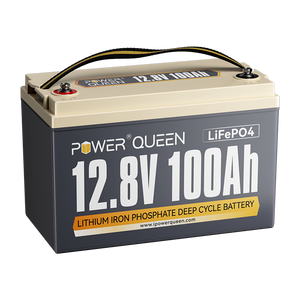
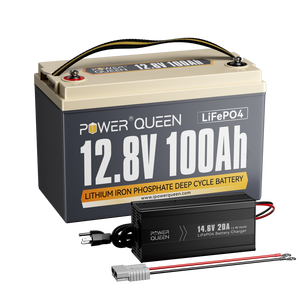
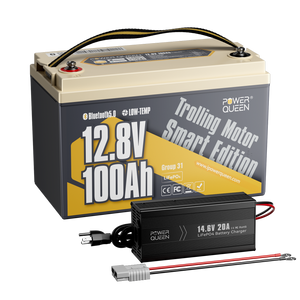
| Group 31 Lithium Battery | 13.00 × 6.77 × 8.43 | 95 to 125Ah | Large RVs and longer off grid stays | Power Queen 12V 100Ah Group 31 LiFePO4 Battery |
Explore Power Queen’s RV battery lineup for more deep-cycle power options.

RV Battery Runtime Examples: What These Sizes Feel Like in Real Use
Battery runtime depends on daily amp hour consumption. In mild weather, LED lighting and water pump use can be modest, so a smaller battery feels fine. In cold weather, the furnace blower can become the dominant load and can consume a surprising amount of energy overnight. If you run an inverter for coffee makers, hair tools, or microwave use, consumption rises quickly and demands a larger battery bank.
| Typical Use Case | Approx Daily Consumption | Battery Size That Usually Feels Comfortable |
|---|---|---|
| Lights, water pump, phone charging | 15 to 30Ah per day | Group 24 or Group 27 |
| Add furnace overnight | 30 to 60Ah per day | Group 27, Group 31, or lithium |
| Add 12V fridge | 40 to 80Ah per day | Group 31 or lithium plus solar |
| Use inverter daily | 80Ah and higher | Large lithium bank |
RV Battery Fitment Checklist: Measure Before You Buy
Fitment is where many RV battery upgrades go wrong. A battery that barely fits on paper can become a problem once you account for cable bends, terminal height, hold downs, and lid clearance. Measure the interior dimensions of your tray or box and compare them to the exact battery specs, not just the group size. Also confirm terminal placement so your cables reach without strain.
| What to Measure | Why It Matters | Common Problem if Ignored |
|---|---|---|
| Tray length | Group 27 and 31 are longer | Battery does not sit flat or cannot be secured |
| Height clearance | Some Group 31 models are taller | Lid will not close or terminals contact the lid |
| Terminal orientation | Terminal positions vary by model | Cables do not reach safely or must be stretched |
| Cable routing space | Prevents rubbing and pinching | Worn insulation, heat, intermittent power |
| Hold down strength | Larger batteries can be heavier | Battery shifts during towing and damages wiring |
If you upgrade from Group 24 to Group 27 or Group 31, remember the battery box itself may be the limiting factor. Many standard plastic boxes fit Group 24 and some fit Group 27, while Group 31 often requires a different box or tray.
💡 Read more: The Ultimate Guide to Replace RV Battery
FAQs About RV Battery Size Chart
Is Group 27 better than Group 24 for RV use
In most cases, yes. Group 27 usually provides more capacity and longer runtime while still fitting many standard trays. Group 24 can still be the right choice if your battery box is small or if you mostly camp with hookups.
💡 Read more: Group 24 vs Group 27 Battery: Key Differences and How to Choose
Can I replace a Group 24 battery with a Group 31 battery
Sometimes, but measure first. Group 31 is longer and often taller, so it may not fit a standard tongue box. Also confirm terminal clearance and hold down strength so the battery can be secured safely.
💡 Read more: Group 24 VS Group 31 Deep Cycle Batteries: AGM VS Lithium
Group 27 vs Group 31: Which one should I pick
Pick Group 27 if you want the easiest fit in common RV trays and tongue boxes. Pick Group 31 if you have the space and want longer runtime between charges, especially for boondocking or heavy furnace use.
Read More: Group 27 vs Group 31 Battery Key Differences and How to Choose
How many batteries do I need for my RV
One battery can work for light use and short stays. Two batteries in parallel increase capacity and can make dry camping more comfortable. If you run a 12V fridge or use an inverter, a larger lithium bank with proper charging support is usually more predictable.
Does a bigger battery take longer to charge
It can, depending on your charger output. A larger capacity battery requires more energy to refill, so charge time increases if charging current stays the same. Lithium can accept higher charging current for longer when your converter, alternator charging setup, or solar system is sized correctly.
Final Thoughts: Group 24 vs 27 vs 31
A good rv battery size chart helps you narrow choices quickly, but the right decision comes from matching fitment and usable power to your camping style. Group 24 is practical for compact compartments and lighter usage. Group 27 is often the most balanced answer for RV owners who want better runtime without major modifications. Group 31 provides longer off grid comfort when you have the space and a secure mounting setup. When you factor in usable capacity, lithium often delivers the biggest real world benefit for boondocking and cold weather trips.