











Watts vs. Watt-Hours: A Complete Guide (2026)
Understanding the distinction between Watts vs. Watt-Hours is the critical foundation for mastering energy efficiency and configuring deep cycle battery storage systems. While these terms are frequently conflated in casual conversation, they represent two fundamentally different electrical concepts: power and energy.
By grasping how an instantaneous "rate" differs from a cumulative "total," you can accurately size your RV solar arrays, manage your utility costs, and ensure your backup batteries have sufficient capacity to sustain your off-grid lifestyle.
Quick Answer: The Key Difference
Watts measure the instantaneous rate of power demand, while watt-hours measure the total amount of energy consumed over a duration of time.
| Unit | What it Measures | Simple Meaning | Real World Use |
|---|---|---|---|
| Watt (W) | Power | How fast energy is being used | Device demand |
| Watt-hour (Wh) | Energy | How much energy is used over time | Battery capacity |
| Kilowatt-hour (kWh) | Large-scale energy | Energy used by homes and utilities | Electricity bills |
Watt: Understanding Electrical Power Demand
The Mathematical Foundation
A watt is the standard unit of power that measures the rate of energy transfer at a single moment in time. In electrical systems, wattage is the product of voltage and current, representing the "pressure" and "flow" of electricity combined. According to the U.S. Department of Energy, the formula for power is P = I x V, where power (Watts) equals current (Amps) multiplied by potential difference (Volts).

💡 Further Reading: Volts vs Amps: The Real Difference Between Voltage and Current.
Real-World Examples of Watts
Individual household appliances require specific wattage levels to function safely and effectively:
- LED Light Bulb: 8 to 12 watts.
- Laptop Computer: 50 to 100 watts.
- Microwave Oven: 800 to 1,200 watts.
- Central Air Conditioner: 3,000 to 5,000 watts.
Why Watts Matter for Device Selection
Wattage ratings determine the physical constraints and safety requirements of your home’s electrical infrastructure. If the combined wattage of devices on a single circuit exceeds the breaker's limit (usually 1,800 or 2,400 watts in U.S. homes), the circuit will trip to prevent overheating. Furthermore, choosing the correct size for a portable power station or solar inverter depends entirely on the peak wattage demand of your appliances.
💡 Related Reading: Volts to Watts Conversion: Formula, Examples, and Common Mistakes.
Watt-Hour: Measuring Total Energy Consumption
The Mathematical Foundation
A watt-hour (Wh) represents the total quantity of energy used when a one-watt load runs for exactly sixty minutes. This unit bridges the gap between power demand and time, allowing for the measurement of capacity. To calculate this value, you simply multiply the device's power draw in watts by the number of hours it remains operational.
Real-World Examples of Watt-Hours
Energy consumption is a cumulative metric that accounts for both the intensity of the device and its duration of use:
- A 100-watt television used for 5 hours equals 500Wh.
- A 50-watt laptop used for 10 hours also equals 500Wh.
- A 1,000-watt vacuum used for 30 minutes equals 500Wh.
Why Watt-Hours Matter for Battery Capacity
Watt-hours serve as the most accurate "fuel gauge" for determining how long a battery-powered system will last. When evaluating portable power stations for camping or emergency backup, the Wh rating tells you how much total energy is stored in the cells. For example, the National Renewable Energy Laboratory (NREL) uses these metrics to define storage durations for residential solar-plus-storage systems.
Kilowatt-Hour: Scaling for Utility Billing
The Mathematical Foundation
A kilowatt-hour (kWh) is a unit of energy equal to 1,000 watt-hours, used primarily to simplify large-scale energy reporting. Because modern American homes consume vast amounts of energy, using watt-hours on a monthly bill would result in numbers that are difficult to read. One kWh is roughly equivalent to running a standard hair dryer for 45 minutes or a ceiling fan for 15 hours.
💡Off-grid Guide: What Is the Difference Between DC and AC? (Essential for understanding house vs. battery power)
Real-World Examples of Kilowatt-Hours
Daily energy usage in the United States is typically measured in dozens of kilowatt-hours:
- Refrigerator: Approximately 1 to 2 kWh per 24-hour period.
- Electric Clothes Dryer: 2 to 4 kWh per average load.
- Electric Vehicle (EV) Charge: 60 to 100 kWh for a full long-range battery.
Why Kilowatt-Hours Matter for Your Monthly Bill
Utility companies use the kWh as the standard unit for calculating your monthly financial obligation for electricity. The U.S. Energy Information Administration (EIA) tracks the average price per kWh across different states, which allows consumers to estimate their bills by multiplying their total kWh usage by the local utility rate. Monitoring your kWh consumption is the most effective way to identify energy-intensive habits in your home.
What is the Difference Between Watt and Watt-Hour?
| Variable | Watt (W) | Watt-Hour (Wh) |
|---|---|---|
| Primary Focus | Power (Capacity/Demand) | Energy (Total Consumption) |
| Analogy | Speedometer (MPH) | Odometer (Total Miles) |
| Time Component | Instantaneous | Cumulative over time |
| Hardware Use | Sizing wires and breakers | Sizing battery banks |
Multiple Analogies for Better Understanding
The relationship between watts and watt-hours can be understood through several common scenarios:
- The Garden Hose: Watts represent the rate of water flow through the nozzle, while watt-hours represent the total gallons collected in a bucket.
- The Car: Watts are the speed at which you are traveling (MPH), whereas watt-hours are the total distance you have covered.
- The Athlete: Watts are the intensity of a single sprint, while watt-hours represent the total calories burned throughout the entire workout session.
Common Misconceptions Addressed
Consumers often confuse power and energy, leading to significant errors when purchasing solar or backup equipment. A common mistake is stating that a solar generator "produces 1,000 watts an hour," which is incorrect; it produces 1,000 watts of power, resulting in 1,000 watt-hours of energy after sixty minutes. Additionally, many believe high-wattage devices are always more expensive to run, ignoring the fact that a low-wattage device used 24/7 can consume more energy than a high-wattage device used for a few seconds.
How Does This Relate to Appliances?
Appliance labels display peak wattage to ensure safe installation, but actual energy consumption depends on the duty cycle. For instance, a 500-watt refrigerator does not pull 500 watts every second of the day; it cycles its compressor on and off to maintain temperature. Understanding this distinction helps homeowners realize that reducing the "on-time" of an appliance is often more effective for saving money than simply finding a lower-wattage alternative.
Uses of Deep Cycle Batteries
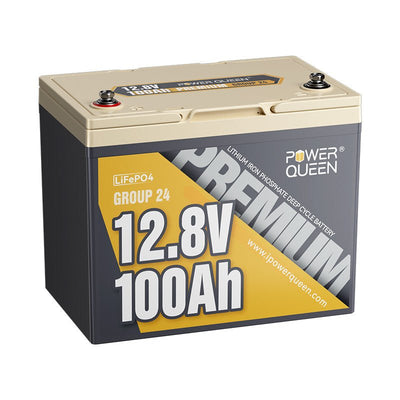
Deep cycle batteries are engineered to provide a steady energy discharge over long periods, making their watt-hour rating the most critical performance factor. These batteries are the backbone of off-grid living in the U.S., powering everything from RV appliances to remote telecommunications towers. Because they are rated for deep discharges, users must calculate their total watt-hour needs to avoid draining the battery below 50% for Lead-Acid or 80% for Lithium models, which can significantly shorten lifespan.
Frequently Asked Questions
Can I convert watts to watt-hours directly?
No, you must multiply the wattage by the duration of time the device is in use.
Does a 1,000-watt heater use 1 kWh every hour?
Yes, if the heater runs continuously without its thermostat cycling off, it will use exactly 1 kWh of energy.
Why does my bill show kWh instead of watts?
Your utility bill focuses on the volume of energy you purchased over a month, not the peak speed at which you used it.
How do I calculate how long a power station will last?
Divide the total watt-hour capacity of the station by the wattage of your device (e.g., 500Wh / 50W = 10 hours).
How do I convert deep cycle battery Amp-hours to Watt-hours?
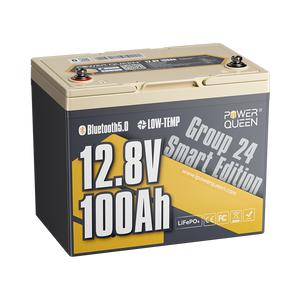
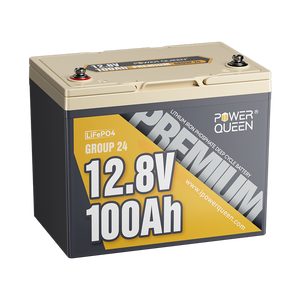
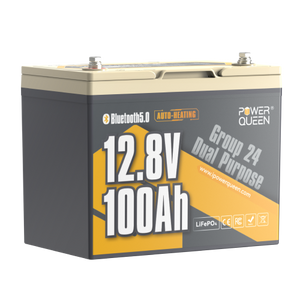
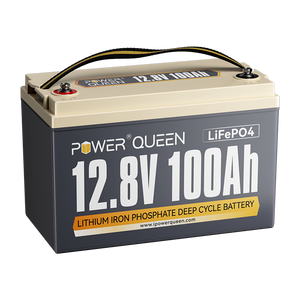
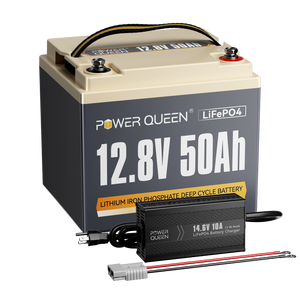
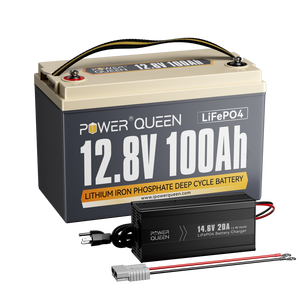
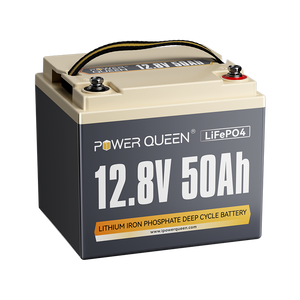
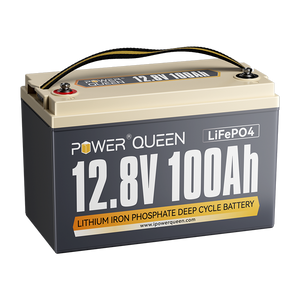
Multiply the battery's Amp-hour (Ah) rating by its voltage (V). For example, a 12V deep cycle battery with 100Ah has a total energy capacity of 1,200Wh (12V x 100Ah = 1,200Wh).
💡Mobile Users: Convert mAh to Wh – Quick Explanation with Table & Calculator.
Why shouldn't I use the full Watt-hour capacity of my deep cycle battery?
Total capacity does not equal usable capacity; Lead-Acid deep cycle batteries should generally not be discharged past 50% of their total Wh capacity, while Lithium (LiFePO4) models can handle up to 80-90% discharge. Exceeding these limits consistently will damage the battery's internal chemistry and reduce its overall life cycles.