








How to Properly Measure LiFePO4 Resting Voltage: A Step-by-Step Guide
LiFePO4 (Lithium Iron Phosphate) batteries are the backbone of modern US home energy storage, RV power systems, and heavy-duty power tools, thanks to their safety and longevity. However, because LiFePO4 has an extremely flat discharge curve, Resting Voltage is the only reliable way to gauge health and State of Charge (SoC).
Inaccurate measurements lead to false "dead battery" scares or, worse, hidden cell degradation. This guide covers the industry-standard method to get laboratory-grade accuracy at home.
1. Why "Resting" Voltage Matters
Unlike lead-acid batteries, LiFePO4 voltage stays nearly constant across most of its capacity. When a battery is under load or charging, "surface charge" or "voltage sag" masks its true state. Resting Open Circuit Voltage (OCV) is the stable voltage of a battery with no current flowing. It is the "source of truth" for:
- Identifying cell imbalance.
- Determining true State of Charge (SoC).
- Preventing over-discharge (the #1 killer of lithium cells).
2. Pre-Measurement Checklist
- The Gear: Use a high-quality Digital Multimeter (DMM) with at least 0.1mV resolution. Avoid cheap analog meters.
- Safety First: Wear insulated gloves. Ensure terminals are clean and free of corrosion or "white powder" oxidation.
- Environment: Best results occur at "room temp" (68°F–77°F / 20°C–25°C). Extreme cold or heat will skew chemical activity and give false readings.
3. The Two-Step Pro Protocol
Step 1: The "Cool Down" (30-Minute Rest)
Disconnect all chargers and loads. Let the battery sit idle for at least 30 minutes.
Pro Tip: If the battery just came off a high-current draw or a fast charge (≥0.5C), the chemistry is still "excited." In these cases, wait 2–4 hours for the most accurate diagnostic data.
Step 2: The Precise Measurement
- Set your DMM to DC Voltage (DCV).
- Connect the Red probe to the Positive (+) terminal and Black to the Negative (-).
- Ensure a firm, metal-to-metal contact.
- Once the reading stabilizes, record the value.
- Shutdown Sequence: Disconnect Red first, then Black, then power off your meter.
4. Voltage Reference Chart (LiFePO4)
Use this table to check the health of your 12V, 24V, or 48V systems:
| System Nominal | Fully Charged (100%) | Fully Discharged (0%) |
|---|---|---|
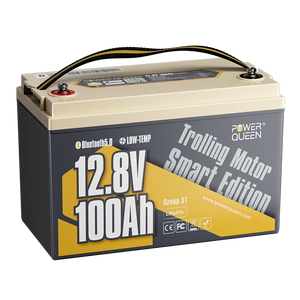
| 12.8V | ≥ 13.33V | ≤ 10.8V |
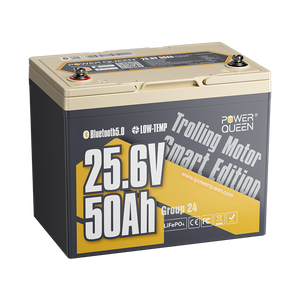
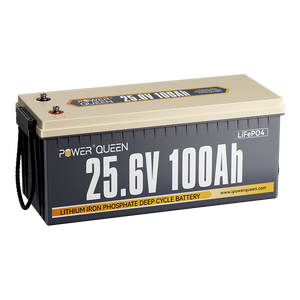
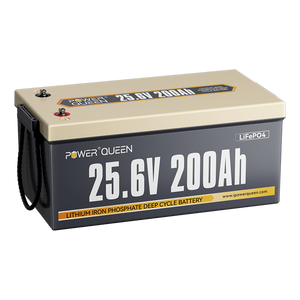
| 25.6V | ≥ 26.66V | ≤ 21.6V |
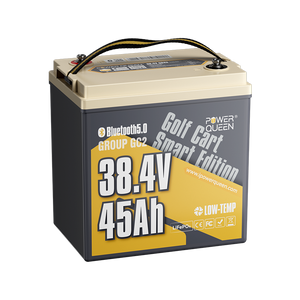
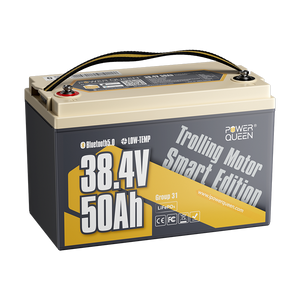
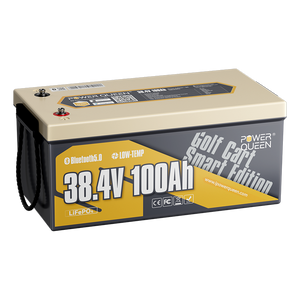
| 38.4V | ≥ 39.99V | ≤ 32.4V |
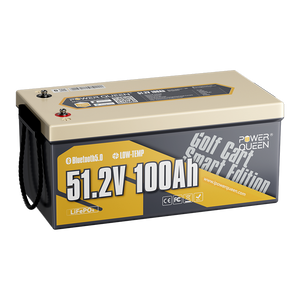
| 51.2V | ≥ 53.32V | ≤ 43.2V |
The "Red Flag" Rule: If you are measuring individual cells or batteries in a series, a deviation of >0.1V between units indicates a serious imbalance. You should perform a top-balance immediately to prevent permanent capacity loss.
5. FAQ: Quick Hits
Q: Is 30 minutes really necessary?
A: Yes. Measuring immediately after charging shows "surface charge" (artificially high voltage). Measuring immediately after a load shows "voltage sag" (artificially low). 30 minutes is the minimum for the chemistry to reach equilibrium.
Q: Should I measure the whole bank or individual batteries?
A: Always measure individual batteries (or cells). A battery bank might show a "healthy" total voltage while one individual unit is dangerously low. Monitoring individual units is the only way to catch a failing cell before it ruins the whole pack.
Q: My voltage is between the "Full" and "Dead" numbers. Is that okay?
A: Perfectly normal. That is your working range. As long as you stay above the "Fully Discharged" threshold, your battery is safe.
6. Summary & Maintenance
The secret to LiFePO4 longevity is Rest and Precision. We recommend a "Health Check" measurement every 6 months.
If you notice a voltage drift (imbalance), fully charge each battery individually, then connect them in parallel for 12–24 hours to balance them. If the voltage continues to drop significantly after balancing, it may be time for a replacement.
📘 Deep Dive: Master Your Battery Data
If you want to optimize your solar or marine setup further, we recommend exploring our comprehensive technical resource: The Ultimate Guide to LiFePO4 Lithium Battery Voltage Charts.