









A Comprehensive Guide to Group 27 Deep Cycle Battery
Choosing the right power source is paramount for reliable performance in marine, RV, and off-grid applications, and the Group 27 Deep Cycle Battery stands out as a versatile and robust option. This guide delves into the essential aspects of Group 27 batteries, from their standardized dimensions to their diverse applications and crucial comparisons with other battery types. Understanding these batteries is key to ensuring your systems run efficiently and dependably, whether you're navigating the open waters or enjoying the tranquility of a remote campsite.
What is The Group 27 Deep Cycle Battery Standard
A Group 27 battery is a standardized classification for a specific size and performance range of deep cycle batteries, primarily defined by the Battery Council International (BCI). The BCI system provides a universal standard for battery manufacturers, ensuring that consumers can easily identify and select batteries that fit their equipment's physical and electrical requirements.
In simple terms, that standard helps manufacturers and users agree on:
-
physical dimensions (so the battery fits your tray/box)
-
typical capacity range (so you have a rough idea of runtime expectations)
These batteries are engineered to deliver a steady current over extended periods, making them ideal for applications that require continuous power draw rather than just a quick burst for engine starting. That’s why Group 27 batteries are commonly used as house batteries in RVs and trolling/accessory batteries in boats.

Group 27 Battery Dimensions & Physical Specifications
Group 27 batteries typically measure approximately 12.06 inches in length, 6.81 inches in width, and 8.87 inches in height, providing a consistent fit for a wide array of battery compartments. While these dimensions are standardized by BCI, minor variations can occur between manufacturers and specific battery chemistries, such as flooded lead-acid, Absorbed Glass Mat (AGM), or lithium-ion.
💡 Pro tip: Always measure your battery box or tray before purchasing to ensure clearance for cables and terminals.
Comparison: Group 24 vs. 27 vs. 31
The table below illustrates how the Group 27 battery serves as the "middle ground" in capacity and size, highlighting the massive weight saving offered by Lithium-ion (LiFePO4) technology.
| Feature | Group 24 Battery | Group 27 Battery | Group 31 Battery |
|---|---|---|---|
| Length (Approx.) | 10.25 inches | 12.06 inches | 13.00 inches |
| Width (Approx.) | 6.81 inches | 6.81 inches | 6.81 inches |
| Height (Approx.) | 8.87 inches | 8.87 inches | 9.44 inches |
| Typical Capacity (Ah) | 75 – 85 Ah | 85 – 105 Ah | 100 – 125 Ah |
| Weight (Lead-Acid) | 40 – 50 lbs | 50 – 60 lbs | 60 – 75 lbs |
| Weight (Lithium LiFePO4) | 20 – 25 lbs | 25 – 30 lbs | 25 – 35 lbs |
| Best Use Case | Small boats, backup power, limited space | RV house banks, trolling motors, mid-size boats | Large RVs, off-grid solar, heavy-duty marine |
If you’re looking for a quick comparison of Group 24, 27, and 31 dimensions, capacities, and applications, check out👉 Deep Cycle Battery Sizes Guide: BCI Group 24, 27 & 31 Size Chart.
Why Choose a Group 27 Deep Cycle Battery?
-
Practical Fit: It is the standard "upgrade size" for most American RV battery compartments and marine battery boxes.
-
Performance Balance: It offers a noticeable runtime upgrade over the Group 24 but remains manageable for a single person to lift and install.
-
Versatility: Perfect for weekend trips, modest inverter loads, and mid-sized trolling motors.
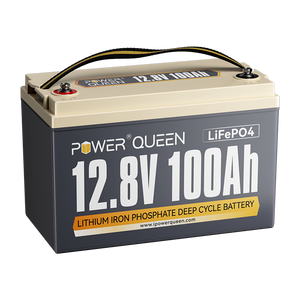
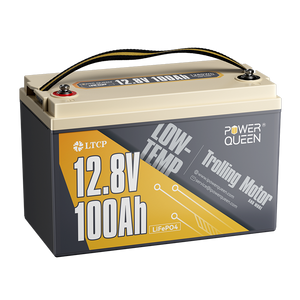
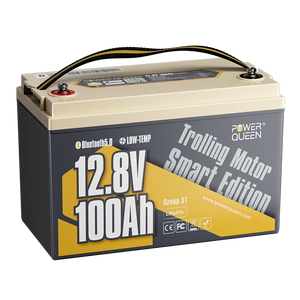
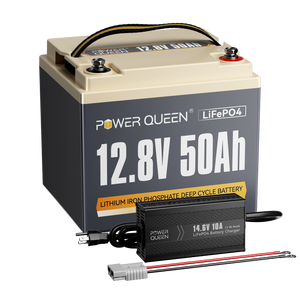
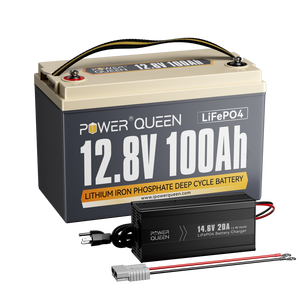
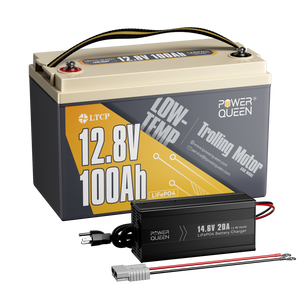
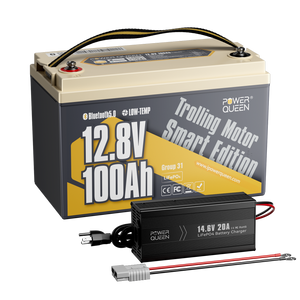
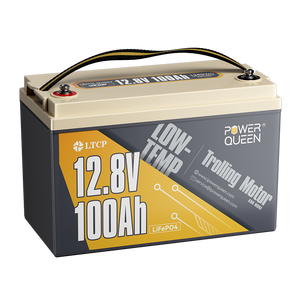
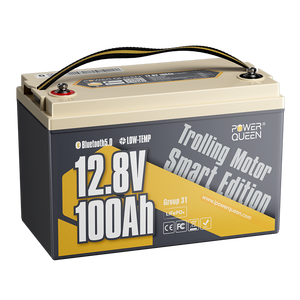
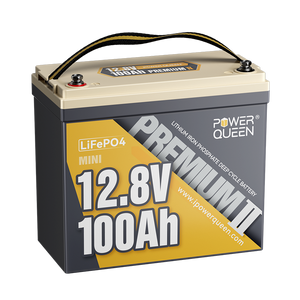
For those seeking advanced energy solutions, brands like Power Queen offer high-performance Group 27 LiFePO4 Lithium options that deliver significantly more usable energy and longer lifespan than traditional lead-acid batteries.
Group 27 AGM Battery vs. Lithium Alternatives
Lithium batteries—especially those built with LiFePO4 (lithium iron phosphate) chemistry—have become a popular upgrade from traditional Group 27 AGM batteries, and for good reason. In real-world use, lithium offers nearly twice the usable capacity while cutting weight by roughly two-thirds.
The biggest difference comes down to usable depth of discharge. Although an AGM battery may be rated at 100Ah, most users avoid draining it beyond about 50% to prevent premature wear and reduced lifespan. By contrast, a LiFePO4 battery can safely discharge to 80% or even 100%, meaning a 100Ah lithium battery delivers significantly more usable energy than a 100Ah AGM battery.
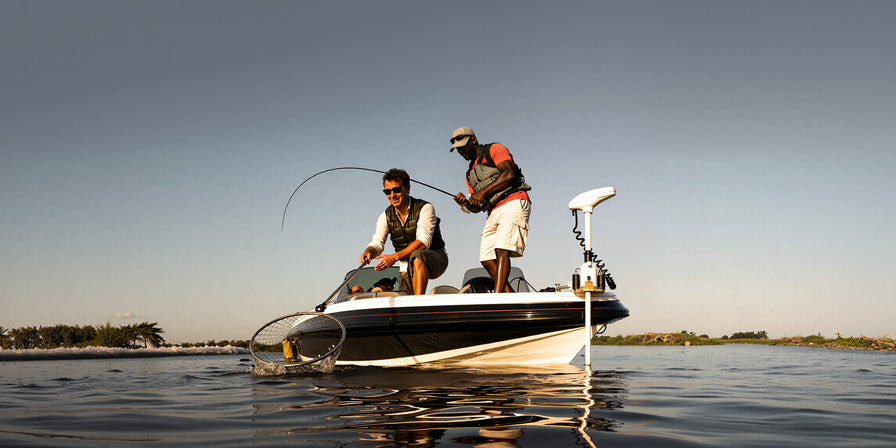
This advantage becomes especially noticeable in performance-sensitive environments—such as bass fishing in the Florida Everglades—where every pound matters. A lighter battery can translate directly into better boat speed, improved fuel efficiency, and sharper maneuverability, giving anglers a real edge on the water. On top of that, the reduced weight makes lithium batteries easier to install, lift, and transport, which is why many enthusiasts now consider them the go-to option.
Quick Comparison: AGM vs. LiFePO4 (100Ah Example)
| Feature | Group 27 AGM Battery | LiFePO4 Lithium Battery |
|---|---|---|
| Typical usable capacity | ~50% of rated capacity | 80–100% of rated capacity |
| Usable energy from a 100Ah battery | ~50Ah | ~80–100Ah |
| Weight | Heavier | ~2/3 lighter |
| Performance impact (boating) | More drag, slower response | Faster, more efficient, more agile |
| Handling & installation | Harder to lift and install | Easier to move and install |
Performance Breakdown: Group 27 Battery vs. Group 31 Battery
When choosing between a Group 27 vs Group 31 battery, the decision usually comes down to one thing: more power vs. more space. In general, Group 31 batteries offer around 20% more capacity and cold-cranking amps (CCA) than Group 27 models, making them a strong option for users who need longer runtime or higher starting power.
That said, the extra performance comes with a larger footprint. A typical Group 31 battery is about 13 inches long, which makes it slightly longer than a Group 27. In many RV and marine setups, that difference matters—battery trays and compartments are often built specifically around Group 27 dimensions, so a Group 31 upgrade may not fit without modifications.
Bottom line: if you have the space and want maximum power, Group 31 is hard to beat. But for many standard compartments, Group 27 remains the best overall balance of capacity, fitment, and convenience.
Quick Takeaway
- Group 31 = more capacity & CCA, but may require a larger tray
- Group 27 = best balance of performance + drop-in fit
👉 For a more in-depth comparison, refer to our article on Group 27 vs Group 31 Battery Key Differences and How to Choose.
Sizing Your Power: Group 27 Battery vs. Group 24 Battery
If you're currently running a Group 24 battery, upgrading to a Group 27 is one of the most practical ways to get more runtime and stronger power reserves without completely reworking your battery setup. In most cases, a Group 24 battery provides about 75–85 amp-hours (Ah), while a typical Group 27 battery offers roughly 85–105Ah—a noticeable improvement in real-world energy storage.
This extra capacity is especially useful in situations like extended dry camping, running higher-draw accessories, or powering marine electronics for longer periods. The good news is that the size increase is usually manageable: a Group 27 battery is approximately 12.06 inches long, compared to about 10.25 inches for a Group 24. For many users, that means a simple upgrade that fits into existing battery boxes with minimal effort.
Quick Takeaway
- Group 27 is often the easiest upgrade path from Group 24 for longer runtime
- In many setups, it fits with minimal changes while offering a meaningful capacity boost
Real-World Applications for Group 27 Battery Size
The Group 27 battery size has earned its reputation as the "Goldilocks" choice for a wide array of demanding applications, particularly in recreational vehicles (RVs) and marine vessels. For RV enthusiasts embarking on extended trips, a Group 27 deep cycle battery serves as the backbone of their house power system, reliably powering lights, water pumps, and essential appliances.
Consider the experience of boondocking in Quartzsite, Arizona, a popular winter destination for RVers; a robust Group 27 battery setup, especially a lithium variant from Power Queen, can efficiently store solar energy, ensuring comfort and independence far from grid connections. In marine settings, these batteries are indispensable for powering trolling motors, navigation systems, and fish finders, providing the sustained energy needed for a successful day on the water. Their balanced capacity and manageable size make them a versatile solution for both leisure and essential power needs.

The Boondocking ROI: A 5-Year Cost Analysis
While lithium batteries, such as those offered by Power Queen, typically present a higher initial investment compared to Group 27 AGM batteries, their total cost of ownership (TCO) over a five-year service life reveals a significant financial advantage for lithium, often proving to be 40% cheaper. This long-term economy stems from several key factors: lithium batteries boast a far greater cycle life (typically 3,000-5,000 cycles vs. 300-500 for AGM), higher usable capacity, faster charging capabilities, and a much longer overall lifespan. For an avid RVer who frequently boondocks, the ability of a lithium battery to endure thousands of deep discharge cycles means fewer replacements and consistent performance, ultimately saving money and hassle. The table below illustrates a hypothetical 5-year TCO comparison for a typical Group 27 setup.
| Feature/Cost Factor | Group 27 AGM Battery (100Ah) | Group 27 Lithium (LiFePO4) Battery (100Ah) |
|---|---|---|
| Initial Cost | $250 | $400 |
| Usable Capacity | 50Ah (50% DOD) | 100Ah (100% DOD) |
| Cycle Life | 400 cycles | 4,000 cycles |
| Lifespan (Years) | 2-3 years | 10-15 years |
| Replacements (5 yrs) | 2 | 0 |
| Total Cost (5 yrs) | $750 (3 batteries) | $400 (assuming 1 battery) |
| Effective Cost/Usable Ah/Year | $3.00 | $0.80 |
Note: Prices are illustrative and can vary based on brand, features, and market conditions. This analysis assumes a single battery system and typical usage patterns.
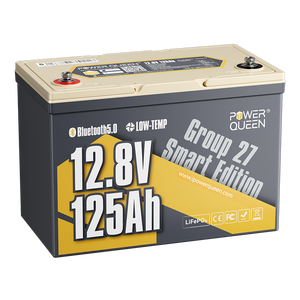
For most RVers, the decision isn’t whether lithium is worth it—it’s which lithium battery delivers the most usable energy without requiring a larger battery compartment. That’s where the Power Queen 12V 125Ah Group 27 Smart Deep Cycle LiFePO₄ Battery stands out.
Smaller Size, Greater Energy with Power Queen
Designed to fit a compact Group 27 footprint, this 12V 125Ah model delivers 1600Wh of energy—about 1.25× the energy of typical 12V 100Ah batteries—making it ideal for RVers who want more runtime without sacrificing space. Compared with a 12V 100Ah lithium battery of the same size, it provides an extra 320Wh of usable energy. In a simple example, that’s up to 32 additional hours when powering a 10W light (320Wh ÷ 10W).
It’s an excellent choice for RV boondocking setups, trolling motors, marine use, camping, solar systems, home energy storage, and off-grid living—especially when maximizing runtime in a limited compartment matters.
![[Like New] Power Queen 12V 125Ah Group27 Smart Deep Cycle Lithium Battery - Power Queen US](http://ipowerqueen.com/cdn/shop/files/PQ-12.8V125Ah-BT-A90_d9d8c2f3-7efc-42c0-9fe5-1f445fc5fccb.jpg?crop=center&format=webp&v=1767671428&width=400)

Maintenance and Safety Standards for Deep Cycle Systems
Ensuring the longevity and safe operation of any deep cycle battery system, whether Group 27 AGM or lithium, necessitates adherence to proper maintenance protocols and safety standards. For traditional lead-acid and AGM batteries, regular checks of terminal connections for corrosion, maintaining appropriate charge levels to prevent sulfation, and ensuring adequate ventilation are crucial. The U.S. Department of Energy (DOE) provides comprehensive guidelines on the safe operation and maintenance of lead-acid storage batteries, emphasizing the importance of proper handling and charging practices to prevent accidents.
Lithium-ion batteries, while largely maintenance-free in terms of fluid levels, require a robust Battery Management System (BMS) to monitor and protect against overcharging, over-discharging, overheating, and short-circuiting. U.S. Coast Guard (USCG) has issued marine safety alerts regarding lithium-ion batteries, highlighting the need for visual inspections for signs of deterioration and proper installation to mitigate risks, especially in marine environments. For instance, boat owners winterizing their vessels in the Great Lakes region must ensure their batteries are properly disconnected and stored according to manufacturer guidelines to prevent damage and maintain safety.
💡 For detailed guidance on preparing your lithium batteries for colder climates, explore our guides on The Ultimate Guide to Lithium Batteries in Cold Weather and How to Store Lithium Batteries Safely in Cold Weather. Always consult the manufacturer's instructions and relevant safety regulations for your specific battery type and application.
Frequently Asked Questions
Common queries regarding Group 27 deep cycle batteries often revolve around their charging times, expected lifespan, and compatibility with various systems.
How long does a Group 27 deep cycle battery last?
The lifespan of a Group 27 deep cycle battery varies significantly based on its chemistry and usage. A lead-acid or AGM Group 27 battery typically lasts 2-5 years, depending on how well it's maintained and how deeply it's discharged. In contrast, a Group 27 lithium (LiFePO4) battery can last 10-15 years or more, offering a much longer cycle life due to its superior chemistry and integrated Battery Management System (BMS).
Can I use a Group 27 battery for starting an engine?
While primarily designed for deep cycling, some Group 27 batteries are available in dual-purpose configurations that can provide sufficient cold-cranking amps (CCA) to start engines. However, for dedicated engine starting, a battery specifically designed for starting applications (often with higher CCA ratings) is generally recommended. Always check the battery's specifications to ensure it meets the CCA requirements of your engine.
What is the best way to charge a Group 27 deep cycle battery?
The best charging method depends on the battery chemistry. For lead-acid and AGM Group 27 batteries, a multi-stage charger designed for deep cycle batteries is recommended to prevent overcharging and sulfation. For Group 27 lithium (LiFePO4) batteries, a charger specifically designed for lithium iron phosphate chemistry is essential. These chargers often have a constant current/constant voltage (CC/CV) charging profile that optimizes charging speed and battery health. Always follow the manufacturer's charging recommendations.
What is the difference between a Group 27 and a Group 27F battery?
The primary difference between a Group 27 and a Group 27F battery lies in the terminal configuration. While both share similar dimensions, the ‘F’ in Group 27F typically indicates a reversed terminal layout or a different terminal type, such as side terminals instead of top posts. It is crucial to verify the terminal placement and type to ensure compatibility with your existing wiring and connections.
Can I mix different types of Group 27 batteries in a single system?
It is generally not recommended to mix different types or chemistries of Group 27 batteries (e.g., lead-acid with lithium) in the same battery bank. Different battery chemistries have varying charging requirements, discharge characteristics, and internal resistances, which can lead to inefficient charging, reduced performance, and premature failure of one or all batteries in the system. For optimal performance and longevity, it is best to use batteries of the same type, age, and capacity within a single battery bank.
Conclusion
Group 27 deep cycle batteries are a solid choice for RV, marine, and solar applications when you need a balance of size and capacity. Once you confirm fitment and understand how it compares to other group sizes, you can choose confidently. If you’re ready to upgrade to longer-lasting, lighter, and more efficient power, consider Power Queen LiFePO₄ batteries for a better long-term solution.