













How Many Watts Does a TV Use? 2026 Power Consumption Guide
How many watts does a TV use? Most modern TVs use about 30 to 200 watts while running. A smaller 32 inch TV may use around 30 to 50 watts, while a 65 inch or larger model can use 100 watts or more depending on screen technology, brightness, picture settings, and content. Knowing how much power a TV uses can help you estimate electricity costs and size a backup LiFePO4 battery system for outages, RV use, or off grid living.
How Many Watts Does a TV Use by Size?
TV size is one of the easiest ways to estimate how much power a TV uses. Larger screens generally consume more electricity because they have more display area to illuminate, although actual wattage varies between models.
| TV Size | Typical Running Watts | Possible Higher Use |
|---|---|---|
| 24 inch | 20 to 35W | 30 to 45W |
| 32 inch | 30 to 50W | 45 to 65W |
| 43 inch | 45 to 75W | 65 to 95W |
| 50 inch | 60 to 100W | 85 to 130W |
| 55 inch | 70 to 120W | 95 to 150W |
| 65 inch | 90 to 160W | 120 to 200W |
| 75 inch | 110 to 200W | 150 to 250W |
| 85 inch | 150 to 270W | 200W or more |
These figures are planning estimates rather than fixed ratings. ENERGY STAR testing measures TV power under standardized picture settings and viewing conditions because actual consumption changes with brightness, display technology, and operating mode.
How Many Watts Does a 32 Inch TV Use?
A 32 inch TV commonly uses about 30 to 50 watts during normal viewing. Its relatively low demand makes this size practical for bedrooms, kitchens, RVs, and other places where energy consumption matters.
A 40 watt TV running for four hours uses about 160Wh, or 0.16kWh, of electricity. This example shows why smaller TVs are easier to support with a battery backup system.
How Many Watts Does a 55 Inch TV Use?
A 55 inch TV generally uses about 70 to 120 watts. High brightness, HDR content, and vivid picture modes can increase power demand, so around 100 watts is a useful estimate when the exact specification is unavailable.
How Many Watts Does a 65 Inch TV Use?
A 65 inch TV commonly uses around 90 to 160 watts during normal viewing. Some bright premium displays can reach or exceed 200 watts under demanding conditions.
Using a slightly conservative wattage estimate is better for backup battery planning. It helps avoid overestimating how long a battery will run the TV during an outage.
How Much Power Does a TV Use by Display Type?
Display technology also affects how much power a TV uses. LED, OLED, LCD, and older plasma televisions create images differently, so two TVs with similar screen sizes may have noticeably different electricity consumption.
| TV Type | Typical Power Range | Energy Characteristics |
|---|---|---|
| LED TV | 30 to 150W | Generally efficient for everyday viewing. |
| OLED TV | 50 to 200W | Power use varies with screen content and brightness. |
| LCD TV | 50 to 200W | Consumption depends heavily on backlight settings. |
| Plasma TV | 100 to 500W | Older technology with generally higher consumption. |
| CRT TV | 65 to 400W | Older technology that is typically less energy efficient. |
LED TV Power Consumption
LED TVs generally provide relatively low power consumption for their screen size. A smaller LED TV may use less than 50 watts, while larger models can require well above 100 watts.
OLED TV Power Consumption
OLED power consumption can change according to what is displayed. Dark scenes can require less energy, while bright scenes and HDR content can increase power demand because individual OLED pixels produce their own light.
How Much Power Does a TV Use Per Hour?
A 100 watt TV uses approximately 100Wh of electricity when it operates for one hour. To convert watt hours to the kilowatt hours shown on an electric bill, divide by 1,000.
100W × 1 hour = 100Wh
100Wh ÷ 1,000 = 0.1kWh
A 100 watt TV running for five hours therefore uses about 0.5kWh. Used for five hours every day, it would consume approximately 15kWh in a 30 day month.
How Much Does It Cost to Run a TV?
The cost of running a TV depends on its wattage, viewing time, and your local electricity rate. According to th U.S. Energy Information Administration, the year to date average residential electricity price in the United States through May 2026 was 18.11 cents per kWh.
| TV Power | Daily Use | Monthly Energy Use | Monthly Cost at 18.11¢ per kWh |
|---|---|---|---|
| 50W | 5 hours | 7.5kWh | About $1.36 |
| 100W | 5 hours | 15kWh | About $2.72 |
| 150W | 5 hours | 22.5kWh | About $4.07 |
| 200W | 5 hours | 30kWh | About $5.43 |
A 100 watt TV used five hours per day costs roughly $2.72 per month at this national average rate. Actual costs vary significantly by location.
Example of TV Electricity Cost in California
The same TV costs more to operate in states with higher electricity prices. California's year to date residential average through May 2026 was 32.83 cents per kWh, according to EIA data.
At that rate, a 100 watt TV consuming 15kWh per month would cost approximately $4.92 per month. This is a useful example of how location can change annual operating costs even when TV wattage stays the same.

What Affects How Much Power Does a TV Use?
Screen size, brightness, display technology, and picture mode are the main factors affecting TV wattage. These variables explain why the real power consumption of a TV may differ from a general size chart.
Screen Size
Larger screens normally require more electricity. A 65 inch television has much more display area than a 32 inch model and typically needs more power to produce a bright image.
Screen Brightness
Higher brightness generally increases electricity consumption. Lowering excessive brightness can reduce power demand and can also extend battery runtime during an outage.
Picture Mode and HDR
Bright picture modes and HDR content can increase TV power consumption. ENERGY STAR testing accounts for different preset picture settings, including default, brightest, and HDR settings, when evaluating television energy use.
How Much Power Does a TV Use in Standby Mode?
A TV can still consume a small amount of electricity when the screen is off. Standby power supports features such as remote control detection, networking, and quick startup.
Current ENERGY STAR television criteria require passive standby power to be no more than 0.5 watts for qualifying models.
Standby demand is small, but it can continue for many hours every day. Disabling unnecessary Quick Start or network features can reduce this background energy use.
How to Find the Actual Wattage of Your TV
Checking the TV's EnergyGuide information or measuring it directly provides a more accurate answer than relying on screen size alone. The Federal Trade Commission requires EnergyGuide information for televisions, with energy figures based on U.S. Department of Energy test procedures.
A plug in electricity meter can also show how much power your TV uses under real conditions. Measuring during normal streaming, sports, gaming, or HDR playback gives a more realistic result than relying only on a maximum power label.
How Much Power Does a TV Use From a LiFePO4 Battery?
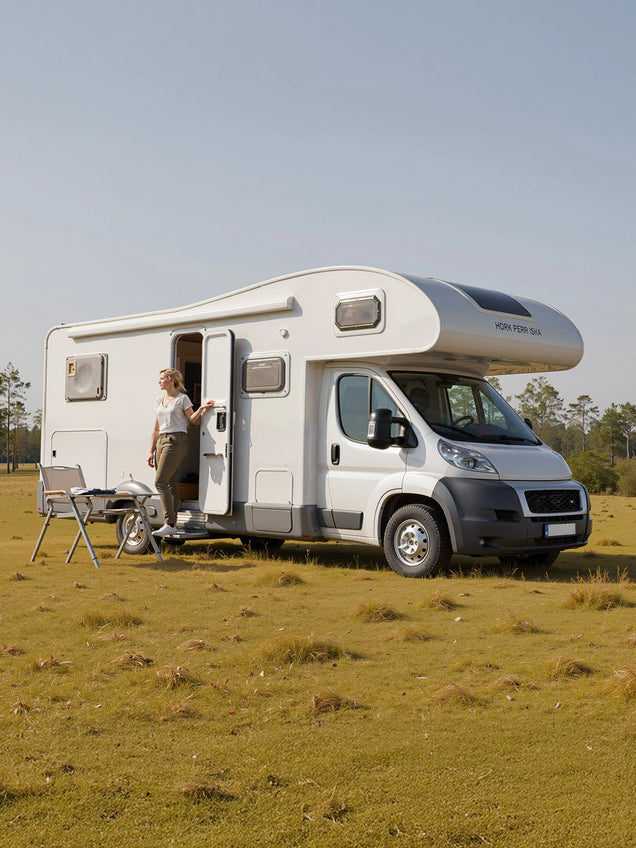
A LiFePO4 battery can run a TV for many hours, depending on battery capacity, TV wattage, and inverter efficiency. This makes LiFePO4 batteries useful for home backup systems, RVs, cabins, and off grid applications.
Battery runtime = usable battery energy ÷ total load
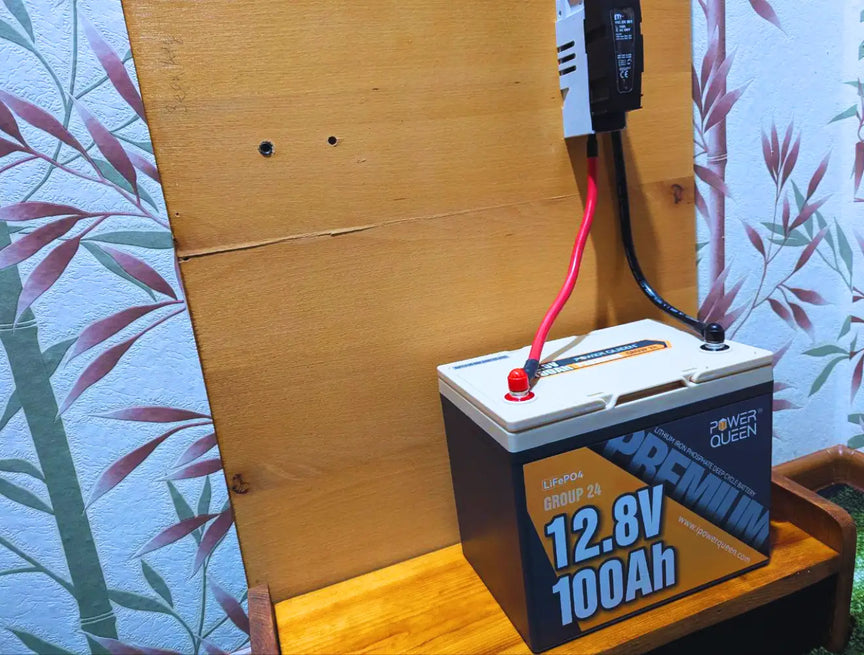
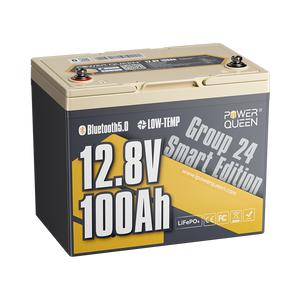
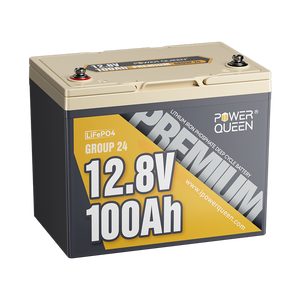
A 12.8V 100Ah LiFePO4 battery stores approximately 1,280Wh. Assuming 90 percent inverter efficiency, about 1,152Wh would theoretically be available for AC loads.
1,152Wh ÷ 100W = about 11.5 hours
A 100Ah battery could therefore theoretically run a 100 watt TV for around 11.5 hours. Actual runtime varies with inverter efficiency, battery condition, temperature, and other connected devices.

Example of TV Power Use in an American RV
A small LED TV places a relatively light load on an RV LiFePO4 system. For example, a family watching a 40 watt TV for three hours after reaching a campground would require about 120Wh before inverter losses.
The entire RV load should be considered when choosing battery capacity. If the RV also powers lights, fans, a refrigerator, and electronics, battery sizing should use total daily energy consumption rather than the TV alone.
Include Your Entire Entertainment System
Backup battery calculations should include everything running with the TV. A WiFi router, soundbar, streaming device, satellite receiver, or gaming console increases total power demand.
A 100 watt TV combined with 50 watts of additional electronics creates a 150 watt load. Using 150 watts rather than 100 watts gives a more realistic runtime estimate.


Power Queen LiFePO4 Batteries for TV and Home Backup Power
For longer runtime and home backup applications, a larger LiFePO4 battery gives you enough stored energy to support the TV along with other essential devices. Instead of sizing the system around the television alone, homeowners can calculate the combined load from the TV, WiFi equipment, lights, laptops, and other devices they want available during an outage.
How to Choose a Power Queen Battery for Your TV and Backup Loads
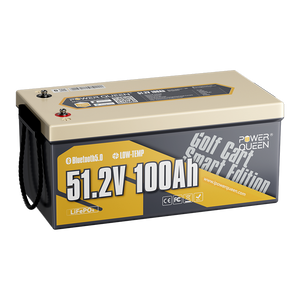
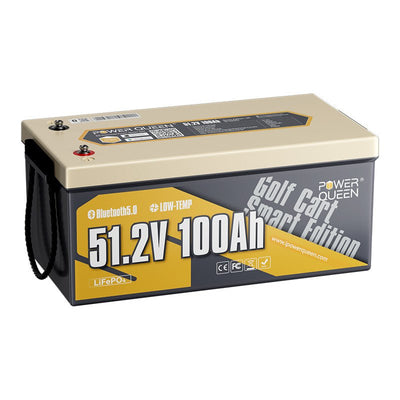
The Power Queen 48V 100Ah Smart LiFePO4 Battery is a strong option for a higher capacity 48V backup system because it stores 5,120Wh of energy. The battery has a nominal voltage of 51.2V, 100Ah rated capacity, a built in 200A BMS, and Bluetooth 5.0 monitoring.
For a TV alone, 5.12kWh is much more capacity than most households need. Its advantage becomes clearer when the television is part of a larger home backup setup.
Assuming approximately 90 percent inverter efficiency, 5,120Wh of stored energy provides about 4,608Wh of theoretical usable AC energy. The table below shows estimated runtime at several example loads.
| Example Backup Load | Estimated Runtime |
|---|---|
| 100W TV | About 46 hours |
| 150W TV and WiFi equipment | About 31 hours |
| 200W TV and electronics | About 23 hours |
| 500W combined backup load | About 9 hours |
A 100 watt TV could theoretically run for about 46 hours under these assumptions, but the more practical benefit is having capacity available for additional household loads. For example, during a U.S. storm related outage, the same battery system could allocate energy between a TV for local news, a WiFi router for communication, lights, and laptops instead of dedicating all 5.12kWh to entertainment.
Bluetooth monitoring also makes it easier to track available backup energy. Power Queen states that the battery can display information such as state of charge and voltage through its Bluetooth connection, while the built in BMS provides multiple battery protection functions.
For households building a compatible 48V battery and inverter system, the Power Queen 48V 100Ah Smart LiFePO4 Battery provides 5.12kWh of capacity for longer backup times and multiple essential loads. The battery, inverter, wiring, protection equipment, and charging components should always be properly matched for the intended system.

FAQs About How Many Watts Does a TV Use
Does a TV Use 100 Watts?
Yes, many modern TVs can use around 100 watts. Smaller LED models may consume considerably less, while large or bright televisions can consume much more.
How Much Power Does a TV Use in 24 Hours?
A 100 watt TV running continuously for 24 hours uses 2.4kWh. The calculation is 100 watts multiplied by 24 hours, which equals 2,400Wh or 2.4kWh.
How Many Watts Does a Smart TV Use?
Smart TVs generally fall within the same broad power range as comparable modern TVs. Screen size, panel technology, brightness, and picture mode usually have a greater effect on running wattage than smart functions.
Does a 4K TV Use More Electricity?
A 4K TV does not automatically consume more electricity than a lower resolution TV. Screen size, panel efficiency, backlight technology, brightness, and picture settings are more useful indicators of actual consumption.
How Many Watts Does a 65 Inch TV Use?
A 65 inch TV typically uses around 90 to 160 watts during normal viewing. Some models can approach or exceed 200 watts when operating at high brightness.
Will a 1000 Watt Inverter Run a TV?
A 1000 watt inverter can run most TVs when the total connected load stays below the inverter's continuous output rating. Inverter wattage determines how large a load the system can support, while battery capacity determines how long that load can run.
Conclusion
Most modern TVs use approximately 30 to 200 watts, although actual consumption depends heavily on size and settings. A 32 inch television may use only 30 to 50 watts, while 55 inch and 65 inch models commonly require considerably more.
Knowing your real TV wattage also makes backup battery sizing much easier. For a television alone, a relatively small LiFePO4 battery may provide several hours of runtime. For longer outages and multiple household essentials, a higher capacity 48V system such as the Power Queen 48V 100Ah battery provides substantially more stored energy and flexibility.