








How Long Can a Lithium Battery Run a Semi Truck Sleeper AC?
An ac for semi truck sleeper use can usually run 6 to 16 hours on a properly sized lithium battery system. Most drivers can expect 8 to 12 hours if the battery bank, AC unit, and charging system are matched correctly. The real runtime depends on battery watt hours, AC power draw, outside temperature, cab insulation, and extra sleeper loads.
A lithium powered sleeper AC is designed to keep the cab cool without idling the main engine. The U.S. EPA notes that idle reduction can help reduce fuel use, emissions, and operating costs for trucks.
The best way to estimate runtime is to use watt hours instead of amp hours alone. A 12V 400Ah lithium battery stores about 5,120Wh, while a 24V 400Ah system stores about 10,240Wh. That is why voltage matters when comparing battery systems.
How an ac for semi truck sleeper works
A separate cooling system for parked trucks
An ac for semi truck sleeper system runs a separate parking air conditioner from an auxiliary lithium battery bank. The truck engine can stay off while the sleeper cab remains cool. This setup is common for long haul drivers who need rest during overnight parking.
Main parts of a lithium sleeper AC setup
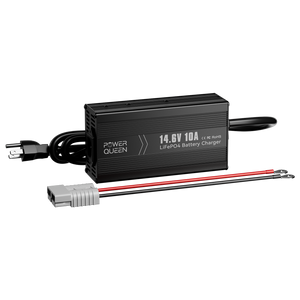
A typical system includes lithium batteries, a battery management system, wiring, fuses, a charger, and a DC sleeper AC unit. Some systems use 12V power, while larger setups may use 24V or 48V power. Higher voltage can reduce current draw and improve system efficiency.
Why AC power draw changes through the night
The AC does not always use full power all night. After the sleeper reaches the set temperature, the compressor may slow down or cycle on and off. That is why a unit rated around 800W may average 400W to 600W in mild weather but run harder in extreme heat.
How long can an ac for semi truck sleeper run on lithium power?
Typical runtime range for most drivers
Most lithium sleeper AC systems run 6 to 16 hours in real conditions. A small battery bank may cover a short rest break, while a larger system can support a full 10 hour break. Hot weather, direct sun, and poor insulation can shorten runtime.
Simple runtime formula
The simple formula is usable battery watt hours divided by average AC watts. For example, 5,000Wh of usable battery energy divided by a 500W average AC load equals about 10 hours of runtime. In real use, drivers should leave 10 percent to 20 percent reserve.
| Battery Setup | Approximate Energy | Average AC Load | Estimated Runtime |
|---|---|---|---|
| 12V 200Ah lithium | 2,560Wh | 500W | 4 to 5 hours |
| 12V 400Ah lithium | 5,120Wh | 500W | 8 to 10 hours |
| 24V 300Ah lithium | 7,680Wh | 600W | 10 to 12 hours |
| 48V 200Ah lithium | 9,600Wh | 700W | 12 to 14 hours |
Why real runtime may be shorter
These numbers are planning estimates, not fixed promises. A truck parked in Phoenix in August may use much more battery than a truck parked near Denver in September. Weather and parking conditions can change runtime by several hours.
What affects ac for semi truck sleeper runtime?
Battery capacity
Battery capacity has the biggest impact on runtime. More usable watt hours usually means more hours of cooling. Amp hours alone can be misleading because a 200Ah battery at 12V stores much less energy than a 200Ah battery at 24V.
AC efficiency
AC efficiency is the second major factor. A high efficiency DC parking AC usually runs longer than an AC unit powered through an inverter. Less power conversion means less wasted energy.
Cab heat load
Cab heat load also matters. NREL’s CoolCab research focuses on reducing sleeper cab heating and cooling loads because better thermal performance can support smaller and more efficient idle reduction systems.
Parking conditions
Parking conditions can make a big difference. A white tractor with window shades in partial shade may run longer than a dark tractor parked on open asphalt in Dallas or Laredo. Direct sun, hot pavement, humidity, and poor airflow all make the AC work harder.
What battery size is best for a Semi Truck sleeper AC?
Recommended battery range
Most Semi Truck sleeper AC users should plan for 5,000Wh to 8,000Wh of usable lithium battery energy for overnight cooling. This range is usually enough for an efficient DC parking AC, phone charging, LED lights, and a few small comfort loads. Hot climate drivers may need more.
Battery size by driver need
Short break drivers can use less capacity. A driver who only needs 3 to 5 hours of cooling may be fine with 2,500Wh to 4,000Wh. A long haul driver sleeping through a full 10 hour break in Texas, Arizona, Florida, or Southern California should size the system more conservatively.
| Driver Need | Suggested Usable Energy | Best Fit |
|---|---|---|
| Short rest break cooling | 2,500Wh to 4,000Wh | Regional routes or backup cooling |
| Standard overnight cooling | 5,000Wh to 8,000Wh | Most long haul drivers |
| Hot climate overnight cooling | 8,000Wh to 10,000Wh | Texas, Arizona, Florida, Southern California |
| AC plus extra appliances | 10,000Wh or more | Drivers using a fridge, CPAP, laptop, or inverter loads |
Why battery size must match charging ability
The best battery size is the one your truck can recharge daily. A large battery bank is not useful if the alternator, DC to DC charger, or drive time cannot refill it before the next stop. Runtime and recharge time should always be planned together.
A compact high capacity lithium option for parallel sleeper AC setups
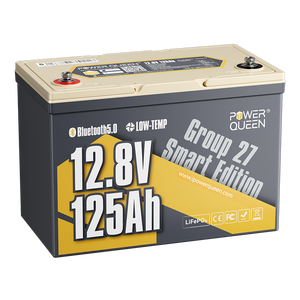
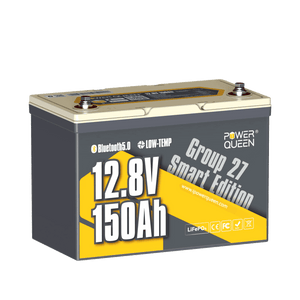
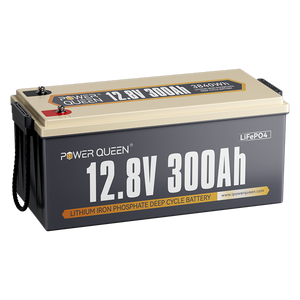
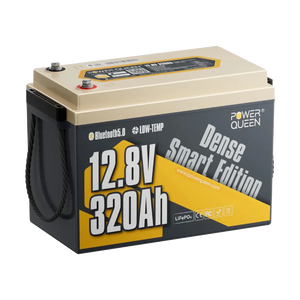
A compact high capacity LiFePO4 battery can be a practical starting point for drivers who want more sleeper AC runtime without taking up too much installation space. The Power Queen 12V 320Ah LiFePO4 battery provides 4,096Wh of stored energy in a compact design, making it easier to fit into tight truck, RV, or under seat spaces compared with using several smaller batteries.
Parallel expansion is usually the better approach for longer sleeper AC use. One Power Queen 12V 320Ah battery stores 4,096Wh. Two batteries in parallel provide 12V 640Ah, or about 8,192Wh. Three batteries in parallel provide 12V 960Ah, or about 12,288Wh. This lets drivers increase runtime while keeping the same 12V system voltage.
| Power Queen Setup | Total Stored Energy | Estimated AC Load | Practical Cooling Reference |
|---|---|---|---|
| One 12V 320Ah battery | 4,096Wh | 500W | About 6 to 7 hours with reserve |
| Two batteries in parallel | 8,192Wh | 500W | About 12 to 14 hours with reserve |
| Three batteries in parallel | 12,288Wh | 500W | More reserve for hot weather or extra loads |
The compact high capacity design is the key advantage. One Power Queen 12V 320Ah battery can replace multiple smaller batteries, reduce wiring complexity, and free up installation space. Its 200A BMS supports up to 2,560W load output, while built in Bluetooth monitoring lets drivers check state of charge, voltage, and performance before parking for the night.

This kind of battery is not just useful for sleeper AC support. It also fits RVs, campers, off grid travel, and other mobile power setups where space, usable energy, and simple monitoring matter. For semi truck sleeper AC planning, using this battery as a parallel expandable power base can make the system easier to size, monitor, and upgrade over time.

Why charging time matters as much as runtime
Runtime is only half the question
Charging time decides whether the system can work every night. Many drivers focus only on how long the AC can run, but the battery must also recover during the next driving shift. The DOE Alternative Fuels Data Center lists idle reduction equipment for heavy duty trucks, including systems that provide HVAC without main engine idling.
This is also why driving time matters after a hot night of battery powered cooling. If the sleeper AC is used before, during, or after a driving shift, drivers should understand how the battery and charging system behave while the truck is moving. For a deeper look at that topic, see our related guide: Will Semi Truck Sleeper AC Run Off Battery While Driving?
Example of daily energy recovery
A simple example explains the issue. If a driver uses 6,000Wh overnight and the charger provides about 1,000W while driving, the battery may need around 6 hours of effective charging time, not counting losses. A coast to coast driver may recover easily, while a short haul or port driver may need shore power or a stronger charging setup.
| Energy Used Overnight | Charging Power While Driving | Estimated Recovery Time |
|---|---|---|
| 3,000Wh | 800W | About 4 hours |
| 5,000Wh | 1,000W | About 5 to 6 hours |
| 7,000Wh | 1,200W | About 6 to 7 hours |
| 9,000Wh | 1,500W | About 7 hours or more |
Why charging estimates can vary
These numbers should be treated as planning estimates. Real charging time depends on alternator output, charger efficiency, cable size, battery state of charge, and how long the truck actually stays at charging speed.
How to make an ac for semi truck sleeper run longer
Reduce heat before parking
The easiest way to extend runtime is to reduce heat before the AC starts working. Pre cool the cab before shutting down the engine, close sleeper curtains, and use a windshield cover. These simple steps lower the cooling load on the battery powered AC.
Use a moderate thermostat setting
A moderate thermostat setting helps the battery last longer. Setting the sleeper around 72°F to 76°F usually uses less energy than forcing the AC to run at its lowest setting. The goal is steady sleep comfort, not maximum cooling.
Keep airflow clean
Clean airflow also saves power. A dirty filter or blocked return air path can make the compressor work harder. Regular filter cleaning helps the AC cool faster and use less battery energy.
Common mistakes when buying ac for semi truck sleeper systems
Choosing by BTU rating alone
The biggest mistake is choosing by BTU rating alone. BTU shows cooling capacity, but watts show battery drain. Drivers should compare BTU rating, average power use, compressor efficiency, voltage, and installation quality.
Using starting batteries for overnight cooling
Another mistake is using starting batteries for overnight cooling. Starting batteries are built to start the truck, not to run comfort loads all night. A dedicated lithium auxiliary battery bank is safer and more reliable.
Ignoring charging speed
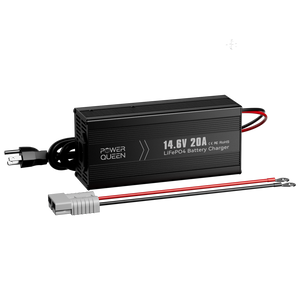
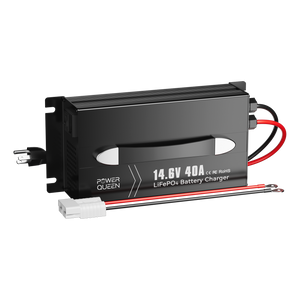
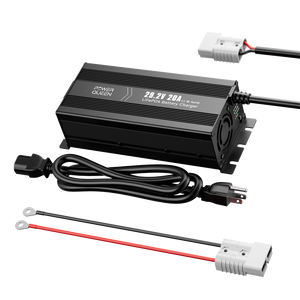
A third mistake is ignoring charging speed. A large battery system needs a charger that can refill it during normal driving. If the charger is too small, the battery may start each night partly empty.
Safety tips for lithium sleeper AC systems
Use proper electrical protection
A safe system needs proper fusing, correct cable size, secure battery mounting, and a lithium compatible charger. These details protect the truck, battery, AC unit, and driver. High current truck electrical systems should be installed carefully.
Check battery state of charge
Drivers should check battery state of charge before parking. A battery that starts the night at 60 percent may not last until morning in hot weather. A simple battery monitor can prevent most surprises.
Understand low temperature charging limits
Battery temperature protection is also important. Some lithium batteries limit charging in freezing conditions unless they include low temperature protection or internal heating. This matters for drivers who run northern routes in winter.
FAQ about ac for semi truck sleeper runtime
How many hours can a lithium battery run a semi truck sleeper AC?
A lithium battery can usually run a semi truck sleeper AC for 6 to 16 hours. A larger lithium system with an efficient AC unit can often support a full overnight stop. Weather, thermostat setting, battery size, and AC power draw affect the final runtime.
What size lithium battery do I need for a Semi Truck sleeper AC?
Most drivers should plan for 5,000Wh to 8,000Wh of usable lithium battery energy. Drivers in hot regions or drivers using extra appliances may need 8,000Wh to 10,000Wh or more. The best size depends on AC watt draw and daily recharge time.
Can I run sleeper AC without idling my truck?
Yes, a lithium powered parking AC can cool the sleeper while the engine is off. This helps reduce fuel use, engine wear, noise, and exhaust around truck stops and rest areas.
Is 12V, 24V, or 48V better for a semi truck sleeper AC?
The best voltage depends on the AC unit and system design. A 12V system is common, but 24V and 48V systems can reduce current draw in larger setups. The battery, charger, AC unit, and wiring should all match the same system voltage.
Will sleeper AC drain my truck starting batteries?
A properly installed sleeper AC should not drain the starting batteries. The safer design uses a separate lithium house battery bank for the AC and other sleeper loads. This keeps the starting batteries ready for engine startup.
Can solar panels run an ac for semi truck sleeper use?
Solar panels can help recharge the battery, but they usually cannot be the only power source for overnight sleeper AC. Truck roof space is limited, and solar output changes with shade, weather, and parking direction. Alternator charging and shore power are usually more dependable.
Final answer on ac for semi truck sleeper runtime
A lithium battery can run an ac for semi truck sleeper setup for 6 to 16 hours in most real world cases. For a full overnight stop, many U.S. long haul drivers should plan for about 5,000Wh to 8,000Wh of usable lithium battery energy. Hot climate routes or extra sleeper appliances may require more.
The best system balances battery size, AC efficiency, charging speed, and driving habits. When those parts match, a Semi Truck sleeper can stay cool through a 10 hour break without idling the main engine. For drivers who want a compact high capacity 12V setup, parallel expandable lithium batteries such as the Power Queen 12V 320Ah lithium battery can provide a flexible path from short break cooling to longer overnight support.