










Convert mAh to Wh – Quick Explanation with Table & Calculator
Convert mAh to Wh when you want a real answer to one simple question: how much energy does a battery actually store? Most batteries show mAh, but that number alone can be misleading because it does not include voltage. In this guide, you will learn how to convert mAh to Wh using a simple formula, a copy and paste calculator, and a quick table for common U.S. battery voltages.
What do mAh and Wh actually mean?
What does mAh mean on a battery label?
If you only look at mAh, you are seeing charge, not total energy. mAh stands for milliampere hour, and it tells you how much electric current a battery can deliver over time under specific conditions. That is why mAh is common on phones, earbuds, and small rechargeable devices. The limitation is simple: mAh does not include voltage, so it cannot tell you how much energy the battery actually stores.
What does Wh measure, and why is it more useful?
Wh is the clearer unit because it measures energy rather than only charge. Wh stands for watt hour, and it includes both current and voltage, which makes it easier to compare batteries across different devices. It is also consistent with how energy is discussed outside of batteries. The U.S. Energy Information Administration explains that a watt hour is the energy of one watt supplied for one hour and that electricity use is commonly measured in Wh and kWh.
Why can the same mAh still mean very different battery life?
The same mAh can store different energy because voltage changes the total result. A 3000 mAh battery at 3.7V is about 11.1 Wh, while 3000 mAh at 12V is about 36 Wh. That difference explains why people get confused when they compare products with only mAh listed. Once you convert to Wh, the comparison becomes fair.
Why converting mAh to Wh matters
When you should convert for a fair comparison
You should convert mAh to Wh whenever batteries have different voltages. mAh can be useful inside one product category, but it breaks down when you compare a phone battery to a laptop battery or a power station. Wh gives you one shared unit that works across brands and device types.
Why travel and safety limits often use Wh
Wh is used in safety discussions because it describes total stored energy. Airlines and shipping rules commonly reference watt hours instead of mAh because energy is what matters for risk and compliance. If your battery label only shows mAh, converting helps you understand what the product really contains.
How Wh helps you estimate runtime more realistically
Wh is practical because devices draw power in watts, and batteries store energy in watt hours. Once you know the Wh value, you can estimate runtime by dividing battery Wh by device watts. The U.S. Department of Energy uses this same energy logic in its examples, such as a 100 watt bulb running for 10 hours using 1000 Wh, which equals 1 kWh.
How to convert mAh to Wh
The mAh to Wh formula
The conversion formula is always the same, and it only needs voltage. Wh = (mAh × V) ÷ 1000. This works because dividing by 1000 converts milliampere hours into ampere hours, then multiplying by voltage gives watt hours.
Which voltage value you should use
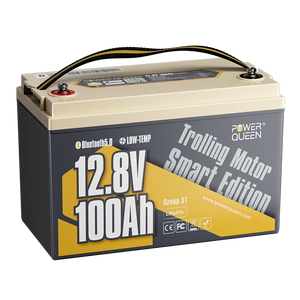
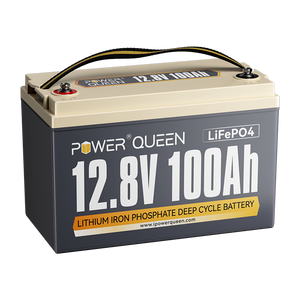
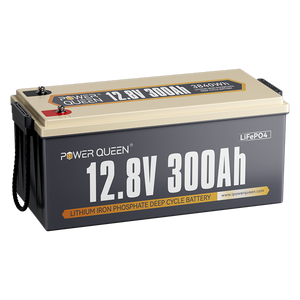
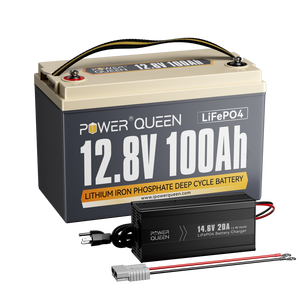
The correct voltage is the battery’s nominal voltage, not a guess. Phone style lithium cells are commonly around 3.7V, while many laptop packs are 10.8V, 11.1V, or higher. LiFePO4 systems often use 12.8V for a 12V class battery. When you use the correct nominal voltage, your conversion stays consistent and comparable.
The most common mistake with power banks
The most common mistake is using the wrong voltage for a power bank. Many power banks advertise mAh based on internal 3.7V lithium cells, even though the output is 5V USB. If you use 5V for a rating that is based on 3.7V, you inflate the stored energy estimate. The safest approach is to follow the voltage that matches how the manufacturer lists the capacity.
mAh to Wh converter
Convert mAh to Wh calculator (copy and paste)
This calculator gives an instant result because it applies the formula automatically. Readers can enter mAh and voltage, then get Wh in one click.
Convert mAh to Wh Calculator
Quick conversion table for the most common voltages
This table is short on purpose, because it focuses on the two voltages many U.S. readers see most often. It covers 3.7V for phone style lithium cells and many power banks, plus 11.1V for many laptop battery packs.
| Battery capacity (mAh) | Voltage (V) | Energy (Wh) |
|---|---|---|
| 1000 | 3.7 | 3.7 |
| 5000 | 3.7 | 18.5 |
| 10000 | 3.7 | 37 |
| 20000 | 3.7 | 74 |
| 26800 | 3.7 | 99.16 |
| 1000 | 11.1 | 11.1 |
| 3000 | 11.1 | 33.3 |
| 4500 | 11.1 | 49.95 |
| 5000 | 11.1 | 55.5 |
| 10000 | 11.1 | 111 |
Why two batteries with the same Wh can still feel different
If two power banks have the same Wh, they can still charge your phone a different number of times, and that does not mean your conversion was wrong. What you are seeing is normal real world energy loss that happens after the battery leaves the label and enters actual use. Most power banks have to convert voltage, and every conversion loses some energy as heat. Your phone also loses energy during charging, and cold weather can reduce how much the battery can deliver.
On a winter road trip, or when you use fast charging, that gap becomes even more noticeable. The simple takeaway is this: Wh is still the best way to compare batteries, but your real results will usually be a little lower than the math. Once you expect that gap, it is much easier to pick the right power bank and avoid disappointment.
Examples of converting mAh to Wh
Example 1: a typical smartphone battery in the U.S.
A phone battery usually lands around the low teens in watt hours. A common example is 3200 mAh at about 3.85V. Wh = (3200 × 3.85) ÷ 1000, which equals 12.32 Wh. This helps you compare phone models more accurately than mAh alone.
Example 2: a 10,000 mAh travel power bank
A 10,000 mAh power bank typically stores around 37 Wh internally when rated at 3.7V. Wh = (10000 × 3.7) ÷ 1000, which equals 37 Wh. That one number makes it easier to estimate how many real phone charges you can expect once conversion losses are considered.
Example 3: a laptop battery pack at 11.1V
A laptop battery can look small in mAh but still store a lot of energy because voltage is higher. A common pack is 4500 mAh at 11.1V. Wh = (4500 × 11.1) ÷ 1000, which equals 49.95 Wh. This is why laptops often show capacity in Wh instead of only mAh.
Bonus: Convert Wh to mAh (reverse formula + calculator)
The reverse formula (Wh to mAh)
The reverse conversion is simple and useful when labels do not match. mAh = (Wh × 1000) ÷ V. This is helpful when a product lists Wh but you want a familiar mAh value for comparison.
Convert Wh to mAh calculator (your code, ready for a website)
This embedded tool gives an instant reverse conversion with the same clean styling as the first calculator.
Convert Wh to mAh Calculator
When the reverse conversion matters most
Reverse conversion matters most when one product label is in Wh and another is in mAh. This comes up often when comparing laptop batteries to power banks, or when reading a portable power station spec sheet and trying to translate it into a number that feels familiar.
Conclusion
The easiest way to get the correct Wh number
The fastest approach is to confirm the voltage and use the single formula every time. Wh = (mAh × V) ÷ 1000. Once you do this a few times, it becomes second nature and you will never need to guess what a battery label really means.
Why Wh is the best unit for comparing energy
Wh works best because it reflects stored energy, not just charge. That is why it is used in bigger batteries, in product compliance discussions, and in the way energy is explained to consumers. It also matches the way electricity usage is measured, as described by the U.S. Energy Information Administration.
FAQs
Can you convert mAh to Wh without voltage?
You cannot convert accurately without voltage because energy depends on both charge and voltage. If voltage is missing, the best you can do is estimate based on typical chemistry, and that estimate may be wrong for higher voltage packs.
What voltage should you use for a power bank conversion?
Use the voltage that matches how the manufacturer rated the mAh value, which is often 3.7V internal lithium cells. Use 5V only if the product clearly states the capacity at 5V output.
Why do airlines and shipping rules prefer Wh instead of mAh?
They prefer Wh because it represents total energy, which is the safety concern for transport. Wh also matches the way energy is commonly measured in consumer electricity explanations.
How do you estimate device runtime after converting to Wh?
Divide battery Wh by the device’s watt draw to estimate hours. This is the same energy logic used in simple consumer examples, such as those from the U.S. Department of Energy discussing watt hours and kilowatt hours.
Why can two power banks with the same Wh feel different?
They can feel different because usable energy depends on efficiency and conditions. Voltage conversion creates heat loss, charging a device adds more loss, and temperature can reduce capacity, even when the label looks similar.
Should you use 3.7V or 5V when converting a power bank?
Use 3.7V when the mAh rating is based on internal cells, which is common. Use 5V only when the manufacturer explicitly rates the capacity at 5V output, because mixing these values is the most common cause of incorrect results.