




How Many Watts Is a Coffee Maker? Coffee Maker Wattage Guide
How many watts is a coffee maker? Most household coffee makers use about 600 to 1,500 watts while brewing. A small drip coffee maker may draw around 550 to 750 watts, while a standard drip machine commonly uses 750 to 1,200 watts. Single serve and espresso machines can reach 1,500 watts or more because they heat water quickly.
Coffee maker wattage matters most when you are choosing an inverter, planning a home backup battery system, or estimating electricity use. Although coffee makers can draw relatively high power, they usually operate at full wattage for only a few minutes at a time.
Coffee Maker Wattage by Type
The type of coffee maker has the biggest effect on its power demand. Most home models fall between 600 and 1,500 watts during brewing, while commercial machines may require considerably more.
| Coffee Maker Type | Typical Wattage | Typical Use |
|---|---|---|
| Small Drip Coffee Maker | 550 to 750W | Small households, dorms, RVs |
| Standard Drip Coffee Maker | 750 to 1,200W | Everyday home use |
| Single Serve Coffee Maker | 900 to 1,500W | Fast single cup brewing |
| Espresso Machine | 1,000 to 1,500W or more | Espresso, cappuccino, latte |
| Coffee Maker With Grinder | 1,000 to 1,500W | Grinding and brewing in one machine |
| Commercial Coffee Maker | 1,500 to 3,000W or more | Cafes, offices, restaurants |
These ranges should be used for planning rather than as exact ratings. The actual wattage is normally printed on the appliance label or listed in the owner's manual.
The University of Maryland Extension gives an example of a coffee maker rated at 120 volts and 7.5 amps, or approximately 900 watts, illustrating how appliance wattage can be determined from its electrical label.
How Many Watts Is a Drip Coffee Maker?
A standard drip coffee maker usually draws about 750 to 1,200 watts while brewing. Smaller four cup machines may use closer to 550 to 750 watts because they heat less water.
The heating element accounts for most of this demand. Once brewing is complete, models with a warming plate generally draw considerably less power than they do during the brewing cycle.
How Many Watts Is a Single Serve Coffee Maker?
A single serve coffee maker commonly requires around 900 to 1,500 watts. Machines such as pod brewers need relatively high power because they heat a small amount of water very quickly.
Although the wattage may be high, the heating cycle is short. This means a single serve machine can have a high instantaneous power requirement without necessarily consuming large amounts of electricity over an entire day.
How Many Watts Is an Espresso Machine?
A home espresso machine commonly uses about 1,000 to 1,500 watts or more. Heating water, producing steam, and operating the pump can create a higher electrical load than a basic drip machine.
Larger automatic espresso machines may also maintain their internal temperature between drinks, which can increase daily energy consumption.

Coffee Maker Wattage During Brewing and Keep Warm Mode
Coffee maker wattage changes throughout the brewing process. The machine typically draws its highest power while heating water, then uses much less electricity after brewing is complete.
| Operating Stage | Typical Power Use | What Happens |
|---|---|---|
| Water Heating | 600 to 1,500W | The heating element raises the water to brewing temperature. |
| Brewing | 600 to 1,500W | Hot water passes through the coffee grounds. |
| Keep Warm Mode | 40 to 200W | A warming plate maintains the temperature of the brewed coffee. |
| Standby | Usually very low | The machine remains powered but is not actively heating water. |
This difference is important when estimating battery capacity. A 1,200 watt coffee maker does not necessarily use 1,200 watt hours every time you make coffee because wattage measures power at a moment in time, not total energy consumed.
How Much Electricity Does a Coffee Maker Use?
A coffee maker usually consumes relatively little total electricity because the high power brewing cycle is short. A 1,000 watt coffee maker running for 10 minutes uses about 167 watt hours, or 0.167 kilowatt hours.
1,000W × 10 ÷ 60 = 167Wh
167Wh ÷ 1,000 = 0.167kWh
If you brew one pot every morning, the machine would use roughly 5kWh per month for brewing alone.
Leaving the warming plate on can noticeably increase that figure. For example, a 100 watt warming plate operating for two additional hours consumes another 200Wh.
Coffee Maker Energy Use Per Brew
The energy required for a cup or pot of coffee depends on wattage and operating time rather than wattage alone.
| Coffee Maker | Example Brew Time | Estimated Energy Use |
|---|---|---|
| 600W Small Drip Maker | 8 minutes | About 80Wh |
| 1,000W Drip Maker | 10 minutes | About 167Wh |
| 1,200W Coffee Maker | 10 minutes | About 200Wh |
| 1,500W Single Serve Maker | 2 minutes | About 50Wh |
This explains why a 1,500 watt pod machine can sometimes consume less energy per brew than a lower wattage drip machine. The higher wattage machine runs for a much shorter period.
How Much Does It Cost to Run a Coffee Maker?
Coffee makers generally cost only a few dollars per year to operate because brewing times are short. The exact cost depends on the coffee maker wattage, daily use, warming time, and local electricity rate.
Through May 2026, the average U.S. residential electricity price was 18.11 cents per kilowatt hour, according to the U.S. Energy Information Administration.
For a 1,000 watt machine operating for 10 minutes each day:
0.167kWh × $0.1811 = about $0.03 per brew
Used once every day, that equals roughly $11 per year for brewing.
Actual electricity costs can be higher if the warming plate remains on for several hours or if the machine heats water repeatedly throughout the day.
What Affects Coffee Maker Wattage?
The heating system has the biggest influence on coffee maker wattage. Machines designed to heat water quickly generally require more power than slower, smaller models.
Coffee Maker Size
Larger coffee makers generally require more electricity during brewing. A four cup drip brewer needs less heating capacity than a machine designed to brew 12 cups at once.
Heating Speed
Faster heating usually requires higher wattage. This is why many pod and espresso machines can reach 1,500 watts even though they prepare less coffee than a large drip machine.
Keep Warm Function
A warming plate adds energy consumption after brewing ends. A thermal carafe can reduce this additional demand because it keeps coffee hot without continuously using electricity.
Usage Frequency
Brewing several times per day increases energy consumption more than the machine's wattage alone suggests. An espresso machine used six times daily can consume significantly more electricity than a larger drip coffee maker used once each morning.

How to Find the Wattage of Your Coffee Maker
The most reliable way to determine coffee maker wattage is to check the appliance label. Wattage, voltage, and amperage are usually printed on the bottom or back of the machine.
If wattage is not listed, you can calculate it using:
Watts = Volts × Amps
For example, a coffee maker rated at 120V and 7.5A uses approximately:
120V × 7.5A = 900W
The University of Maryland Extension uses this approach when explaining how to inventory electrical loads for battery and solar system sizing.

How Many Watts Does a Coffee Maker Need From an Inverter?
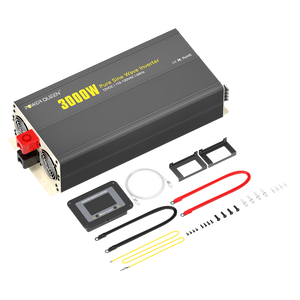
An inverter should have a continuous output rating higher than the coffee maker's maximum wattage. For a 1,200 watt coffee maker, choosing an inverter with comfortable capacity above 1,200 watts is safer than selecting one rated exactly at the appliance load.
A common 1,500 watt coffee maker can already use most of the capacity of a small inverter. Running another high power kitchen appliance at the same time can overload the system.
For example, using a 1,200 watt coffee maker together with a 1,000 watt microwave creates a combined load of approximately 2,200 watts before other devices are considered.
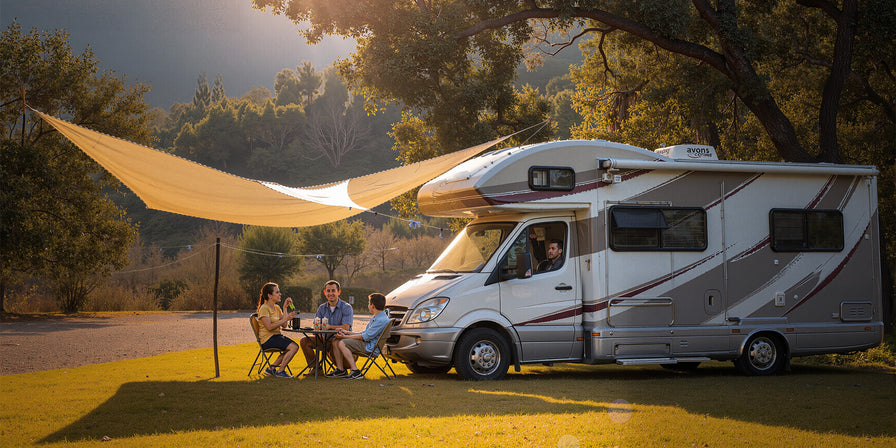
This becomes especially important in RV and home backup systems where several appliances may share one inverter.
Coffee Maker Wattage vs Battery Capacity
Coffee makers highlight an important difference between watts and watt hours. Watts tell you whether your inverter can handle the coffee maker, while watt hours tell you how much battery energy each brew consumes.
This distinction is especially important when designing a LiFePO4 backup battery system.
A 1,200 watt coffee maker operating for 10 minutes uses approximately 200Wh. If an inverter is 90 percent efficient, the battery must provide roughly:
200Wh ÷ 0.90 = about 222Wh
A battery does not therefore need 1,200Wh of capacity just because the coffee maker is rated at 1,200 watts. It needs enough inverter output to handle the 1,200 watt load and enough stored energy to supply the machine for the required brewing time.
This is a common source of confusion when sizing backup power.
Can a LiFePO4 Battery Run a Coffee Maker?
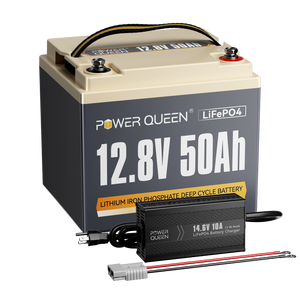
A properly sized LiFePO4 battery and inverter system can run most household coffee makers. The key is making sure the inverter supports the coffee maker's wattage and the battery can safely supply the required current.
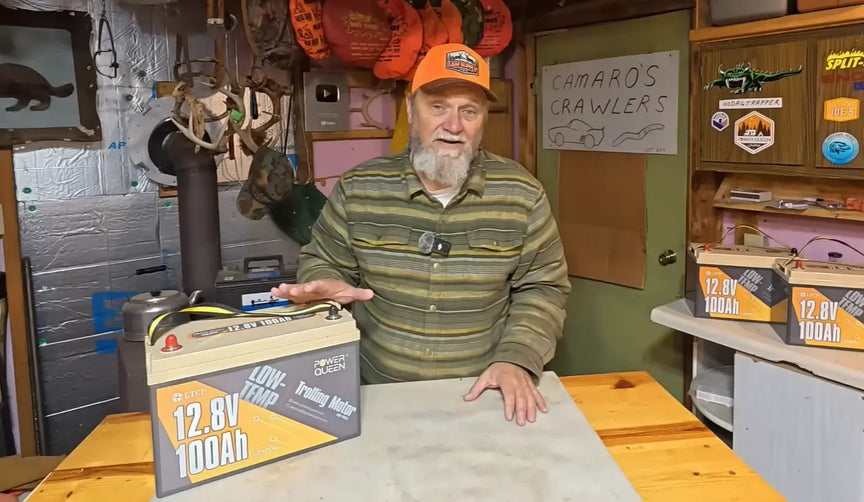
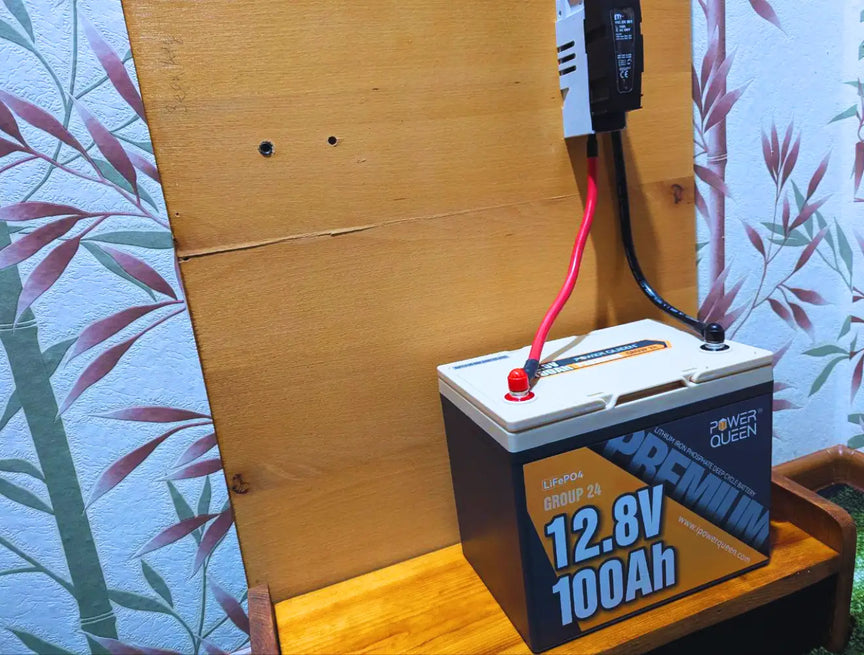
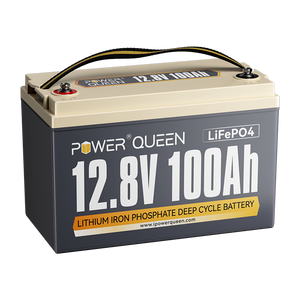
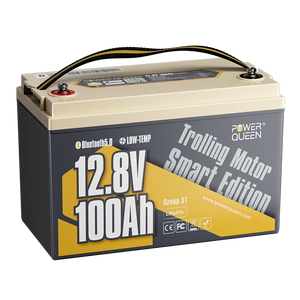
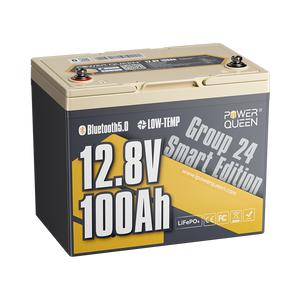
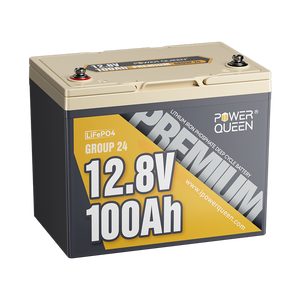
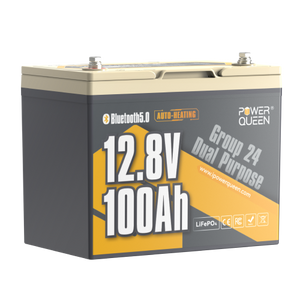
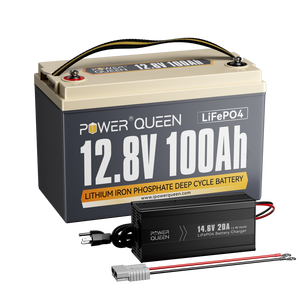
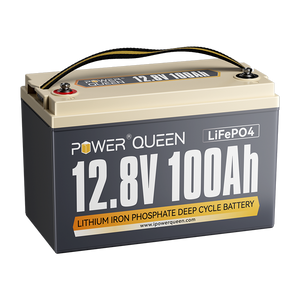
For example, a 12.8V 100Ah LiFePO4 battery stores approximately 1,280Wh of energy.
A 1,200 watt coffee maker used for 10 minutes consumes about 200Wh before inverter losses. With approximately 90 percent inverter efficiency, one brewing cycle requires about 222Wh from the battery.
1,200W × 10 ÷ 60 = 200Wh
200Wh ÷ 0.90 = about 222Wh
In theory, the battery could support several brewing cycles, although actual results depend on the battery discharge limit, inverter efficiency, temperature, and other appliances running at the same time.
For home backup use, sizing the system around the refrigerator, lights, WiFi equipment, coffee maker, and other essential loads provides a more realistic result than calculating around the coffee maker alone.
Power Queen LiFePO4 Batteries for Coffee Makers and Home Backup Power
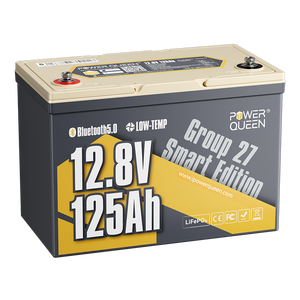
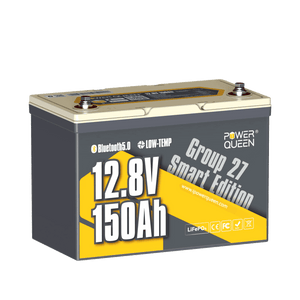
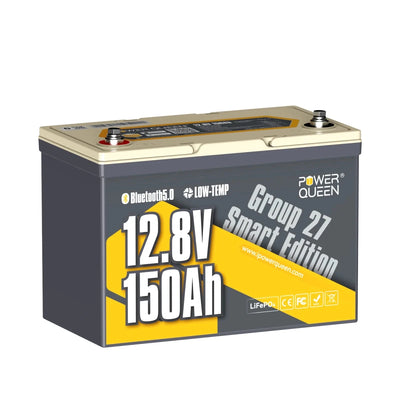
For coffee makers and other essential RV or backup loads, the Power Queen 12V 150Ah Group 27 LiFePO4 Battery provides 1,920Wh of energy in a compact Group 27 size. It offers 50% more usable energy than a typical 12V 100Ah lithium battery, giving users longer runtime without moving to a larger battery compartment.
More Energy for Coffee Makers and Other Appliances
The 12V 150Ah battery is designed for users who want to run more than one appliance without constantly choosing what to shut off. One battery supports up to 1,920W output, while a two-battery setup can provide up to 3,840W, making it better suited to higher-demand RV and backup loads such as a coffee maker, microwave, refrigerator, TV, and other essentials.
| Battery Setup | Stored Energy | Maximum Output | Suitable Use |
|---|---|---|---|
| 1 Battery | 1,920Wh | Up to 1,920W | Coffee maker, refrigerator, TV, lights, WiFi, and other essential loads |
| 2 Batteries | 3,840Wh | Up to 3,840W | Higher-demand appliance combinations and longer RV runtime |

How Long Can a Power Queen 12V 150Ah Battery Run a Coffee Maker?
A single 12V 150Ah battery stores approximately 1,920Wh. Assuming about 90 percent inverter efficiency, approximately 1,728Wh may be available to AC appliances.
| Coffee Maker Load | Example Brew Time | Approximate Energy Per Brew | Estimated Brews Per Battery |
|---|---|---|---|
| 800W | 10 minutes | About 133Wh | About 12 brews |
| 1,000W | 10 minutes | About 167Wh | About 10 brews |
| 1,200W | 10 minutes | About 200Wh | About 8 brews |
| 1,500W | 5 minutes | About 125Wh | About 13 brews |
These are theoretical estimates. Actual results depend on inverter efficiency, battery state of charge, temperature, and other appliances operating at the same time.
Compact Group 27 Size With 50% More Energy
The Power Queen 12V 150Ah battery delivers 50% more usable energy than a typical 12V 100Ah lithium battery while keeping a compact Group 27 footprint. This makes it easier to upgrade RV house battery systems without moving to a larger battery compartment.
Its compact design is suited to A-frame trays and common RV battery compartments, making it a practical fit for travel trailers, van campers, truck campers, motorhomes, fifth wheels, teardrops, and other RV setups.
Fast Recharging for RV and Backup Use
The battery can recharge in as little as 3.75 hours with a compatible 40A charger. It can also be recharged from solar, alternator, generator, or shore power, giving users more flexibility when traveling or preparing for backup use.
Bluetooth Monitoring and Cold Weather Protection
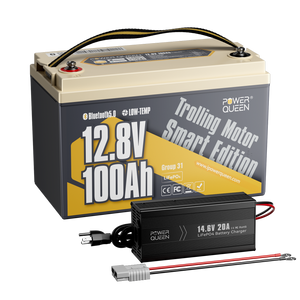
Bluetooth 5.0 monitoring lets users check SOC, voltage, temperature, charging and discharging time, and BMS health status from a phone, making it easier to track remaining battery capacity during trips or outages.
Intelligent low-temperature protection also helps prevent harmful charging and discharging conditions in cold weather, adding protection for winter camping and seasonal use.

FAQs About Coffee Maker Wattage
What Is the Average Coffee Maker Wattage?
Most household coffee makers use approximately 600 to 1,500 watts while brewing. Standard drip models commonly fall between 750 and 1,200 watts, while pod and espresso machines can reach 1,500 watts or more.
Is 1,500 Watts a Lot for a Coffee Maker?
A 1,500 watt rating is normal for many fast heating coffee makers. The power demand is high compared with small electronics, but the machine usually runs at maximum wattage for only a short period.
How Many Watts Does a Keurig Use?
Many single serve pod coffee makers operate in the general range of 900 to 1,500 watts while heating and brewing. Exact wattage varies by model, so the product label should be checked before choosing an inverter or backup battery system.
How Many Watts Does a 12 Cup Coffee Maker Use?
A typical 10 to 12 cup drip coffee maker commonly uses around 750 to 1,200 watts while brewing. Larger or faster models can use more.
Can a 1,000 Watt Inverter Run a Coffee Maker?
A 1,000 watt inverter can run some smaller coffee makers, but it may not be sufficient for a machine rated at 1,000 watts or more. The inverter's continuous output should comfortably exceed the coffee maker's actual maximum load.
Does a Coffee Maker Use Electricity When Turned Off?
A basic coffee maker may use little or no electricity after it is switched off, while programmable and smart models can continue drawing a small amount for clocks, displays, or connectivity. Unplugging the machine eliminates this standby consumption.
How Much Power Does a Coffee Maker Use in an RV?
An RV coffee maker uses approximately the same wattage as it would at home. The main difference is that the inverter and battery must supply that power. A 1,000 to 1,500 watt coffee maker can therefore be a significant short term load on an RV electrical system.